Sliding glass doors are one of the most common entry points for home break-ins — not because they’re impossible to secure, but because most homeowners don’t secure them properly. A standard pin lock in the track might stop casual tampering, but it does almost nothing against a determined intruder who knows how to lift a sliding door off its track or force the latch. In 2026, smart mortise locks built specifically for sliding glass doors have changed that equation entirely.
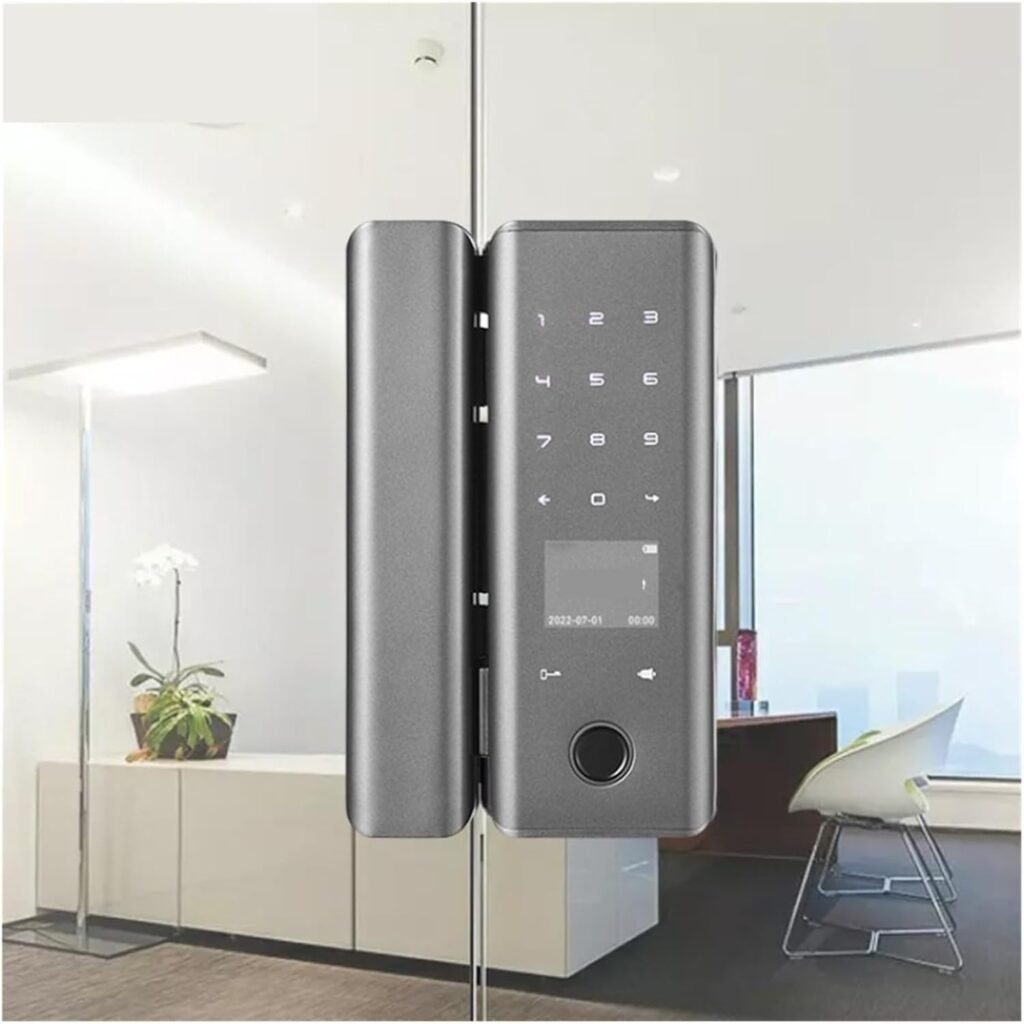
The problem most buyers run into is simple: the smart lock market is dominated by products designed for front doors with a standard deadbolt bore. Those locks physically cannot be installed on a sliding glass door — wrong mechanism, wrong shape, wrong mounting system entirely. A sliding glass door needs a mortise-style hook bolt lock that slots into the door stile rather than boring through it.
Every product in this guide is specifically designed for sliding glass and patio doors. No workarounds, no adapter kits — locks that actually fit the door type they’re meant to protect.
Top 5 Best Smart Locks for Sliding Glass Doors
#1 — Anweller 2885 Mortise Sliding Glass Door Smart Lock
Best Overall Smart Lock for Sliding Glass Doors
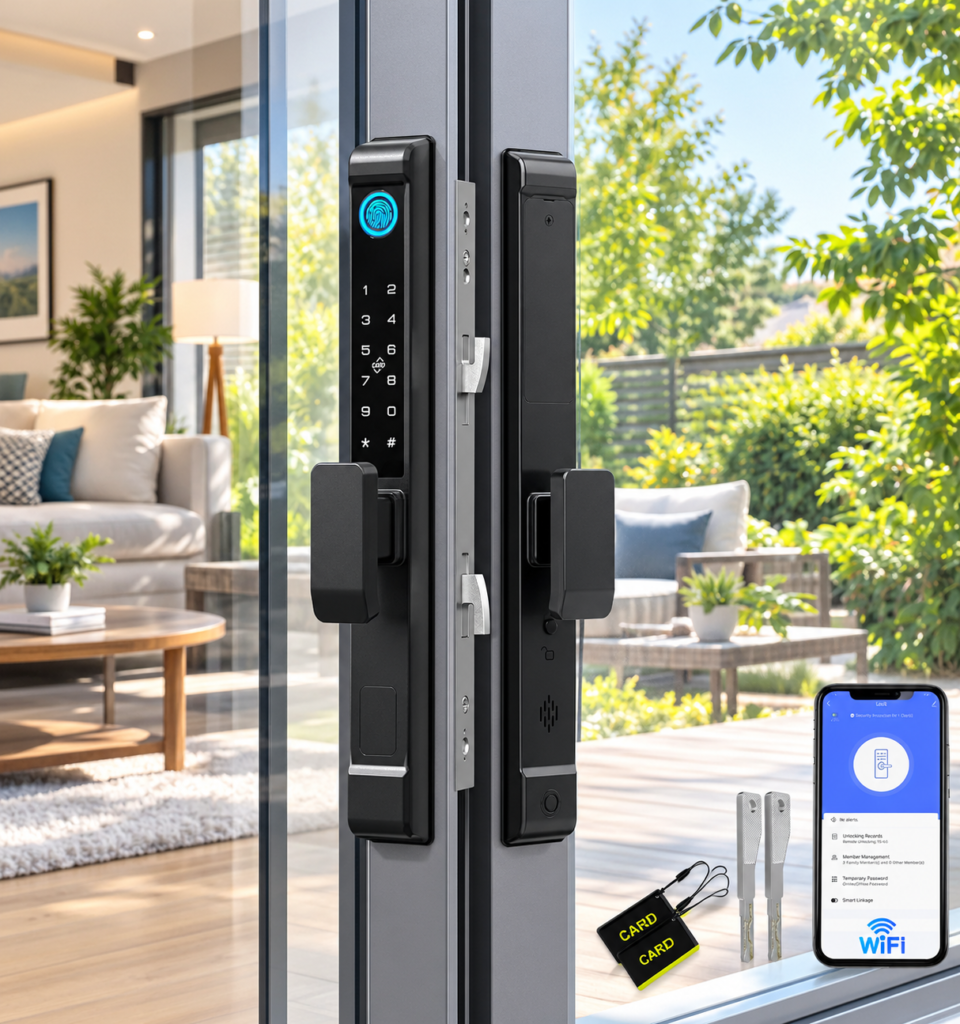

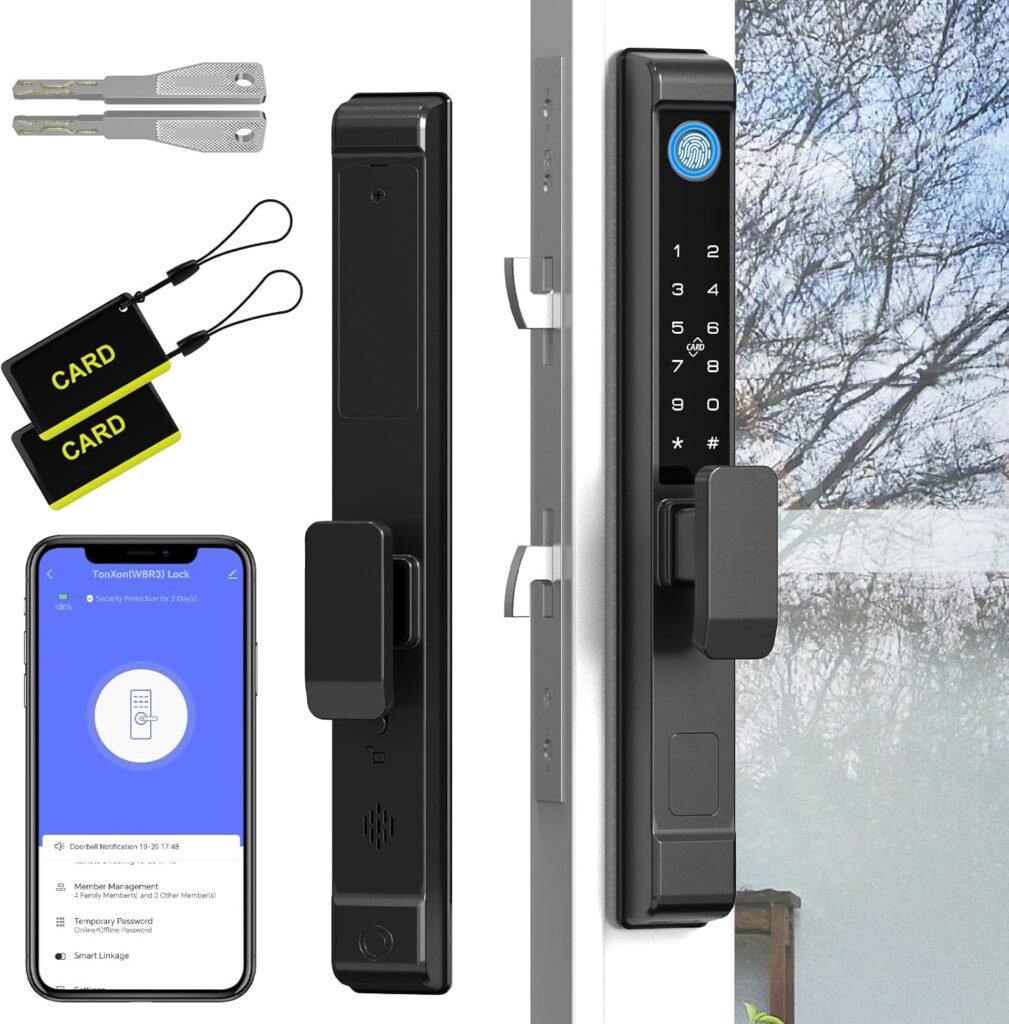
Mortise Size: 2885 | Unlock Methods: 5 (Fingerprint, PIN Keypad, RFID Card, Remote App, Mechanical Key) | Door Thickness: 13/15″ to 4-3/4″ (22mm–120mm) | Frame Width Required: ≥1.8″ (45mm) | IP Rating: IP54 | Battery Life: ~8 months | Emergency Power: USB-C | Warranty: 12 months | Tamper Alarm: Yes (90-second lockout after 5 failed entries)
Why We Picked It
The Anweller 2885 shows up at the top of nearly every independent sliding door smart lock comparison published in 2026 — including three-month real-world testing by multiple review sites — and the reasons are consistent across all of them: it delivers a rare combination of robust physical security, five genuinely useful unlock methods, and reliable day-to-day performance that holds up under regular use.
The double-hook mortise mechanism is the most important hardware detail. Most basic sliding door locks use a single hook bolt. The Anweller’s double hook engages both the door frame and the strike plate simultaneously, creating two physical contact points that resist prying and lift-out attacks far more effectively than a single hook. Independent testing simulating forced entry — including prying the door frame — confirmed the double hook holds significantly better than single-hook alternatives at the same price point.
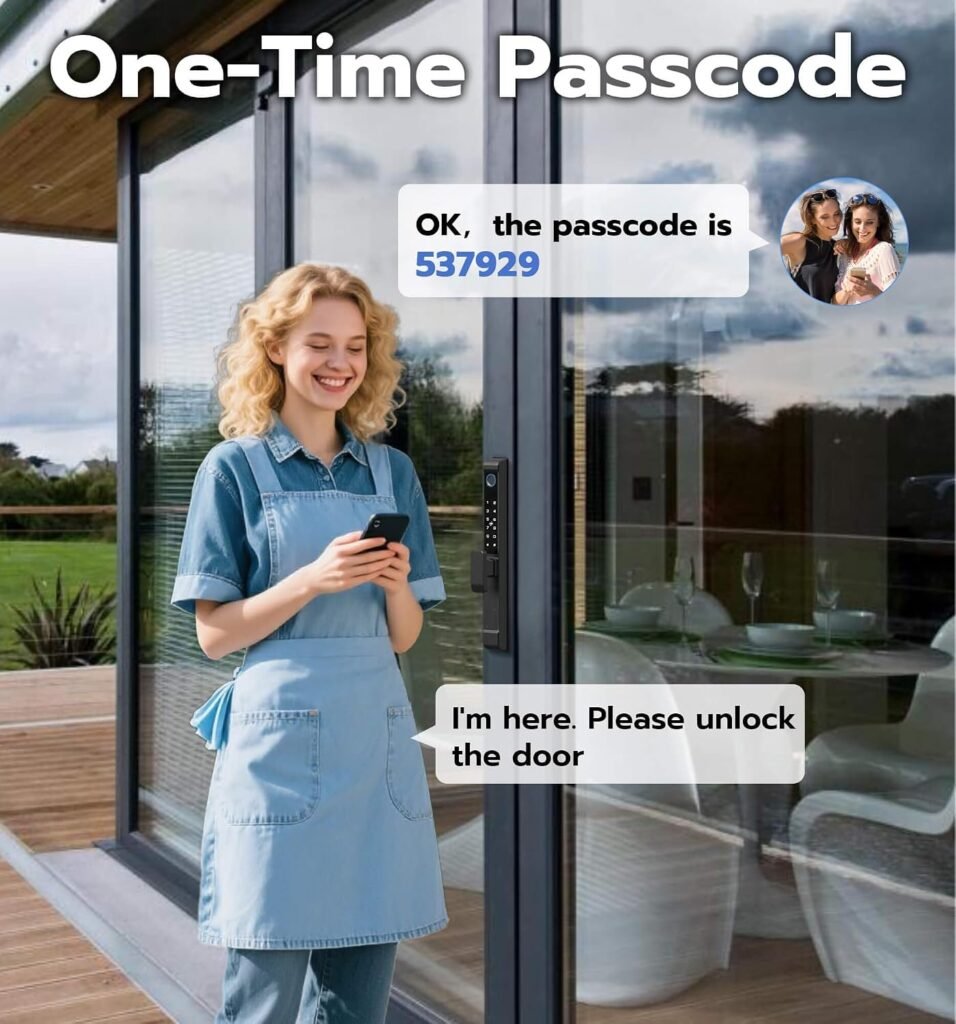
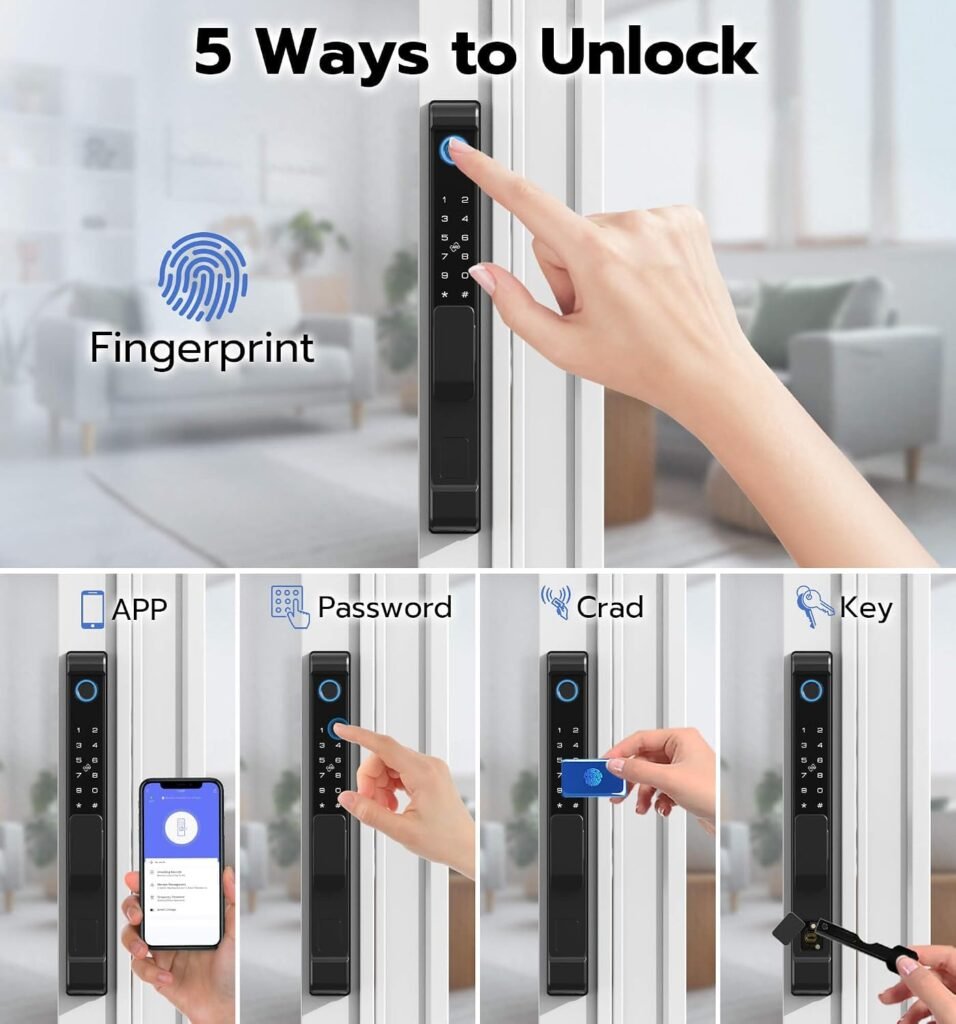
Five unlock methods cover every practical access scenario without redundancy. Fingerprint recognition handles the majority of daily entries — no fumbling, no codes, just a touch. PIN keypad covers guests and family members who don’t want to enroll a fingerprint. RFID card (2 included) works for quick tap access. Remote app gives you control from anywhere — particularly useful for letting in a delivery, a housesitter, or a contractor when you’re not home. Mechanical key provides backup access when electronics fail or batteries die — a non-negotiable safety net for any smart lock.
The tamper alarm is a standout security feature: after 5 invalid entry attempts, the keypad locks down for 90 seconds and triggers an audible alarm. This directly addresses brute-force PIN guessing — a real vulnerability on locks without this protection.
USB-C emergency power means a dead battery doesn’t lock you out. Touch any USB-C power bank to the port, get enough charge for a few entries, replace the batteries. The ~8-month battery life under normal use means you’ll rarely need it, but knowing it’s there is reassuring.
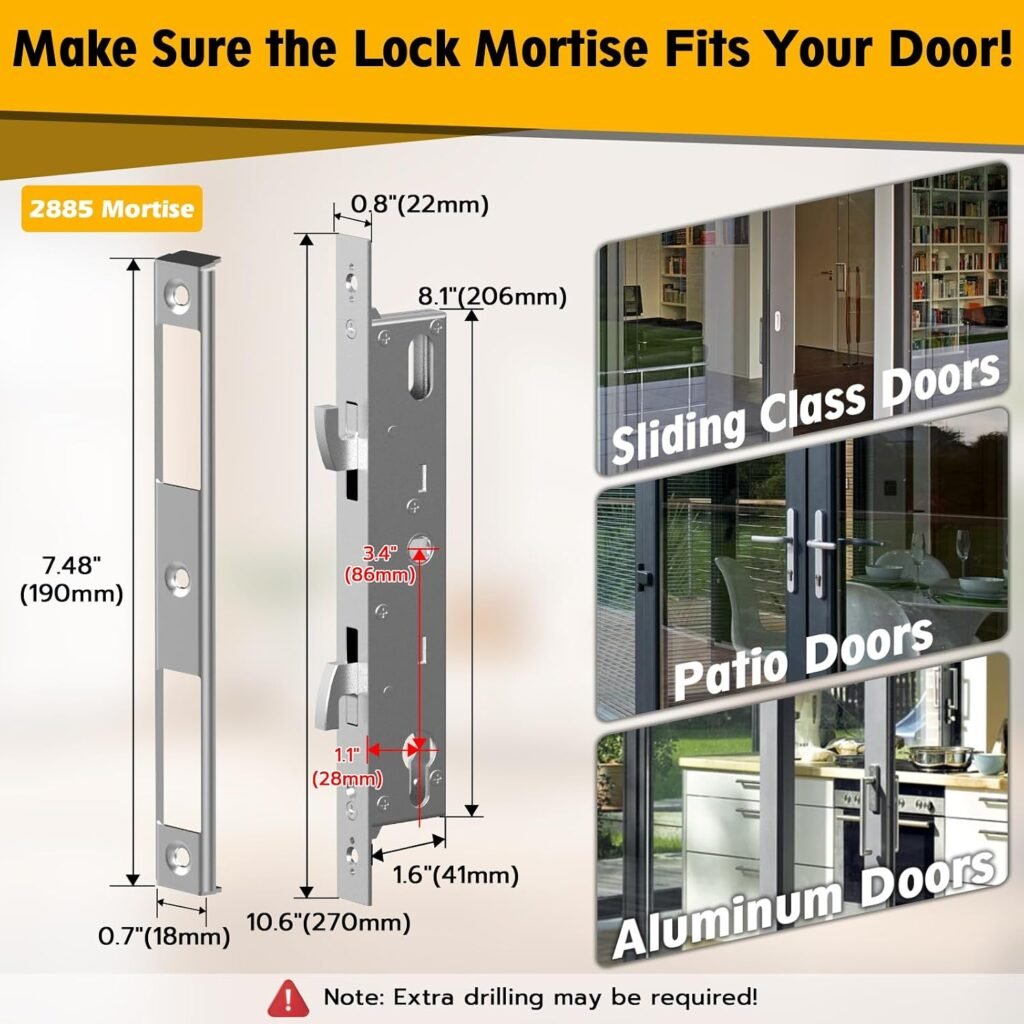
The 2885 mortise fits door thicknesses from 22mm to 120mm — the broadest compatibility range in this guide. Frame width must be at least 45mm for installation. Measure your door stile carefully before ordering, and contact Anweller with your exact dimensions if you’re uncertain about fit.
Pros:
- Double-hook mortise provides superior resistance to prying and lift-out attacks
- 5 unlock methods cover every practical access scenario
- Tamper alarm + 90-second lockout after 5 failed entries
- Wide door thickness compatibility (22–120mm)
- ~8-month battery life with USB-C emergency backup
- App enables remote access, temporary codes, and access history
- AES-256 encryption on app and keypad communication
- 12-month warranty
Cons:
- IP54 rating — good for semi-sheltered patios but not direct heavy rain exposure
- 2885 mortise requires a larger pocket — may need professional routing if not pre-cut
- Smaller brand with less established support network than major lock brands
- Installation is more involved than a simple track pin lock
Bottom line: The best overall smart lock for sliding glass doors in 2026. The double-hook security, five access methods, and tamper protection make it the most complete package in this category at its price point.
#2 — JNZCH Smart Mortise Sliding Door Lock with Fingerprint & App Control
Best for App Control and Smart Home Integration
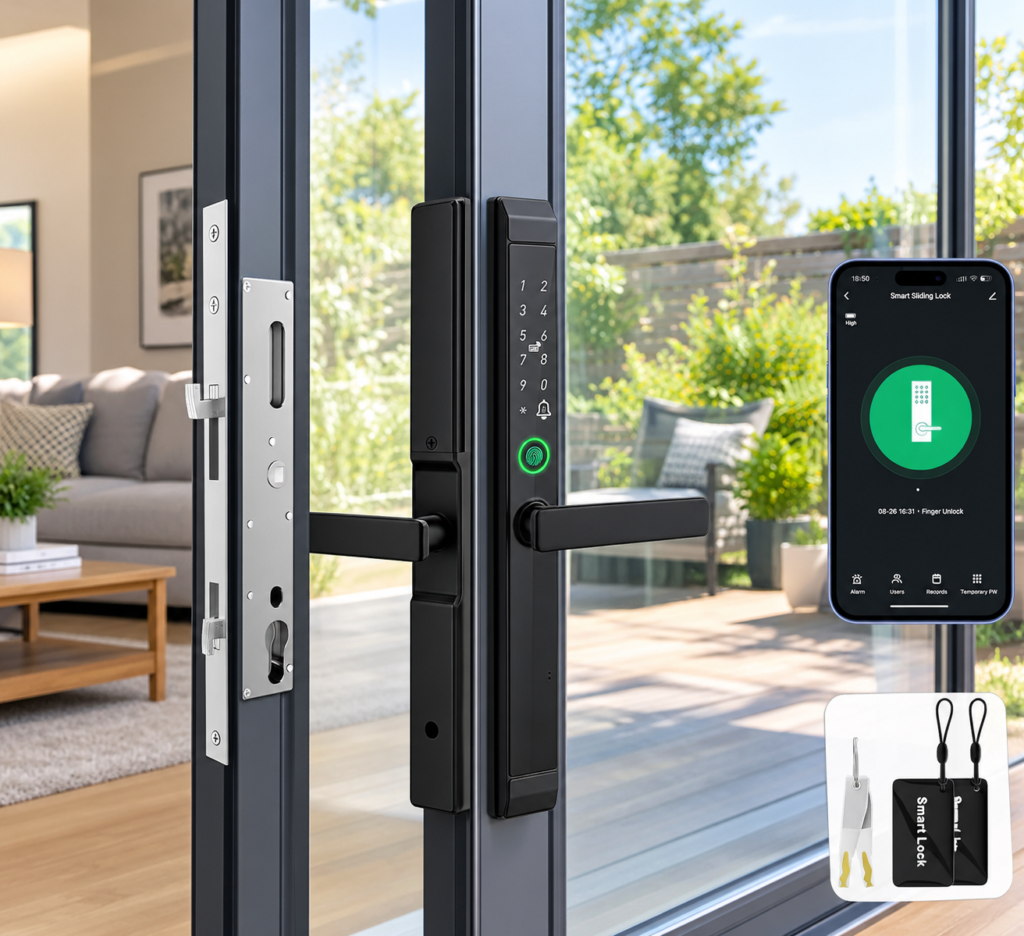
Brand: JNZCH | Mortise Size: 2885 | Unlock Methods: 5 (Fingerprint, PIN, IC Card, App, Mechanical Key) | WiFi: Required for setup (2.4GHz) | App: Tuya | IP Rating: IP65 | Emergency Power: USB-C | Temperature Range: -25°C to 55°C (-13°F to 131°F) | Anti-Peep PIN: Yes
Why We Picked It
The JNZCH takes a slightly different approach from the Anweller — where the Anweller prioritizes hardware security and physical robustness, the JNZCH prioritizes smart home integration and app-driven features. For homeowners who already use a Tuya-based smart home ecosystem or who want the deepest level of remote app control, the JNZCH is the pick.
The Tuya app integration is the key differentiator. Tuya is one of the most widely used smart home platforms globally, which means the JNZCH can be integrated with voice assistants, smart home automation routines, and other Tuya-compatible devices your home might already use. If you want your sliding glass door to automatically lock when your home security system arms at night, or to receive a notification every time the door is accessed, the Tuya platform makes those automations straightforward.
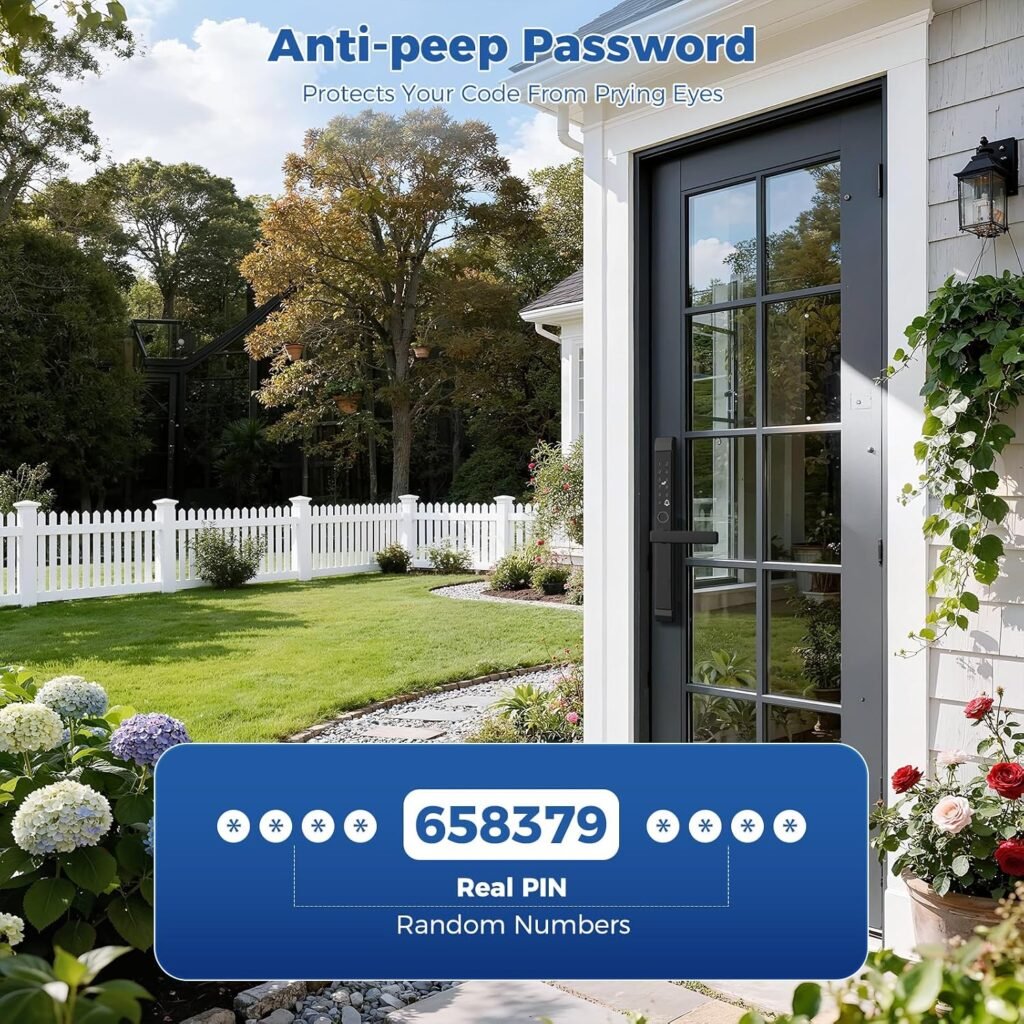
The anti-peep touchscreen is a practical security feature that not every lock in this guide includes. Anti-peep mode lets you enter random digits before and after your actual PIN code — so someone watching your keypad entry can’t identify your real code from the sequence of buttons you press. For a patio door visible from a neighbor’s yard or a shared outdoor space, this is a genuinely useful privacy feature.
IP65 weatherproofing is a step up from the Anweller’s IP54 — fully dust-tight and protected against water jets from any direction. For patio doors that face direct weather exposure rather than sheltered by an overhang, IP65 is the more appropriate rating.
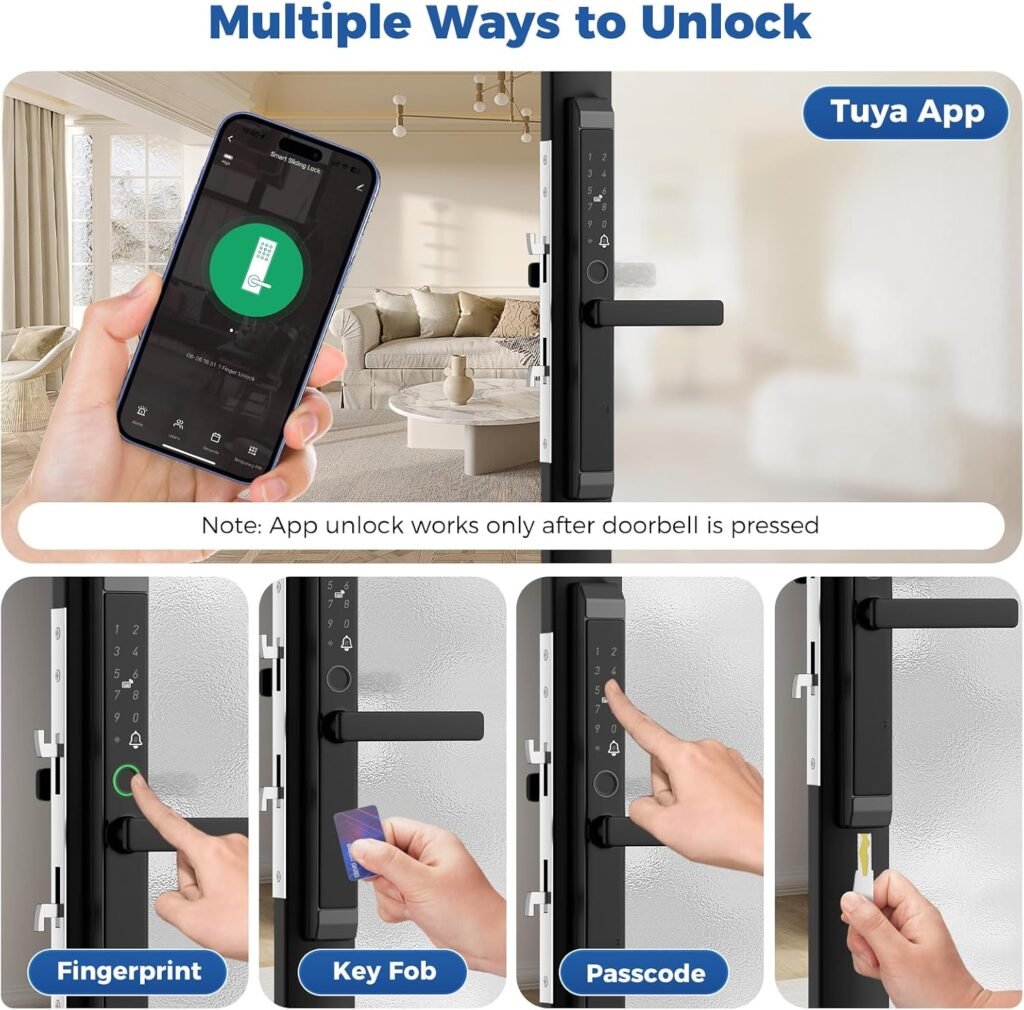
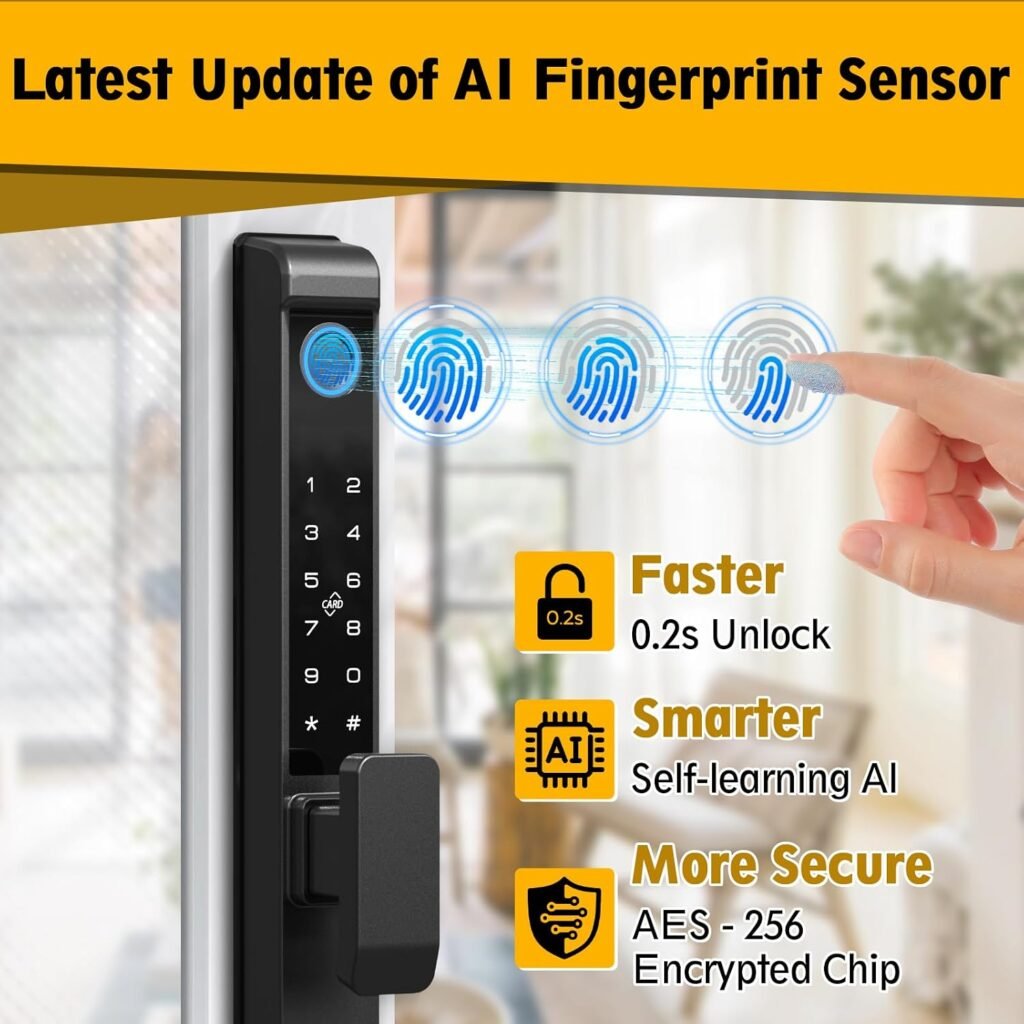
The fingerprint reader was described by multiple independent testers as “the highlight” of the lock — fast recognition with a low false-rejection rate, which matters for the access method you’ll use dozens of times a week.
Pros:
- Tuya app integration enables smart home automation and voice assistant control
- IP65 weatherproofing — better weather resistance than IP54 alternatives
- Anti-peep touchscreen PIN protection
- Fast, accurate fingerprint recognition
- USB-C emergency power
- Wide operating temperature range (-13°F to 131°F)
- Timed access codes for guests and contractors
Cons:
- Requires 2.4GHz WiFi for initial setup — not fully offline capable
- WiFi bridge needed for remote access beyond Bluetooth range
- Installation is detailed — not as beginner-friendly as simpler products
- 2885 mortise compatibility requirements must be verified before purchase
Bottom line: The best sliding glass door smart lock for homeowners invested in a smart home ecosystem. Tuya integration, IP65 weatherproofing, and anti-peep PIN protection set it apart for tech-forward households.
#3 — Eseesmart Sliding Glass Door Smart Lock with Fingerprint, RFID & Bluetooth App
Best for High User Capacity and Long-Term Durability
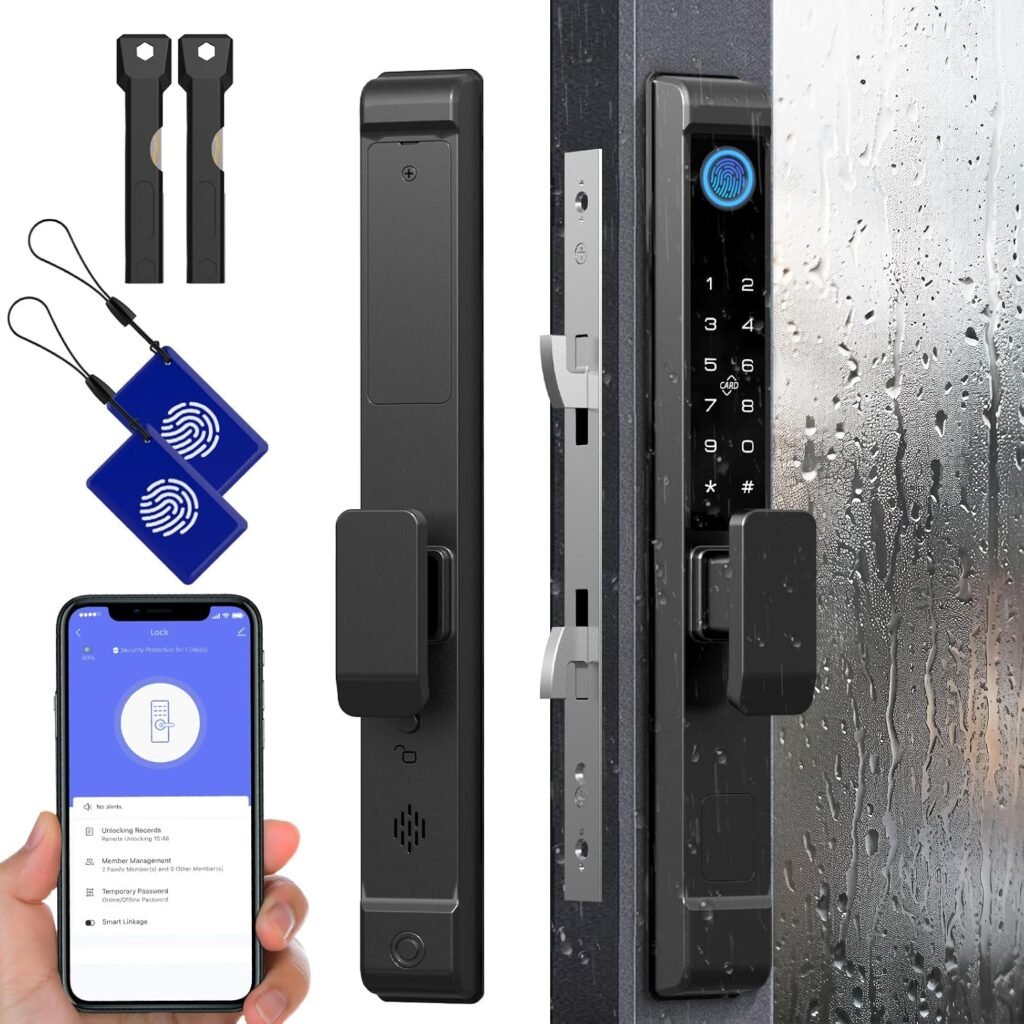
Brand: Eseesmart | Unlock Methods: 5 (Fingerprint, PIN Keypad, RFID Card, Bluetooth App, Mechanical Key) | User Capacity: 300 users | IP Rating: IP65 | Durability: 15,000+ tested cycles | Handle: Reversible (left or right) | Connectivity: Bluetooth (WiFi gateway optional) | Emergency Power: USB-C
Why We Picked It
The Eseesmart earns the Editor’s Choice designation from multiple 2026 review sites for a consistent set of reasons: it delivers all five access methods, an exceptional 300-user capacity, IP65 weatherproofing, and a 15,000-cycle durability rating — a combination that makes it particularly well-suited for rental properties, vacation homes, and large households where multiple people need reliable access over an extended period.
300 user slots is the standout specification. The Anweller and JNZCH handle standard household use comfortably, but the Eseesmart’s user capacity is in a different league. For Airbnb hosts, vacation rental managers, or property managers who need to issue, rotate, and revoke access codes across a large number of guests and contractors, 300 slots means you’ll never run out of space for new users or need to manually delete old ones to add new ones.
The 15,000-cycle durability rating is the other key specification that separates this lock from competitors in high-frequency use scenarios. Where a typical residential lock might see 2–10 actuations per day, a rental property with frequent turnover can see 20–30 per day. At 15,000 cycles, the Eseesmart is rated for several years of that intensive use before any wear-related degradation is expected.
The reversible handle is a practical installation detail that matters more than it sounds — it means the same lock can be installed on sliding doors configured for either left-hand or right-hand operation without purchasing a separate handed unit.
Bluetooth connectivity covers local remote access from within range. An optional WiFi gateway enables full remote access from anywhere — useful for property managers who need to check access logs and issue temporary codes remotely.
Pros:
- 300 user slots — best user capacity in this guide
- 15,000-cycle durability rating for long-term heavy use
- IP65 weatherproofing for fully exposed patio locations
- Reversible handle — fits left or right-handed door configurations
- All 5 unlock methods including Bluetooth app
- USB-C emergency power
- Ideal for rental properties and vacation homes
Cons:
- Full remote access requires optional WiFi gateway (additional cost)
- Larger lock body than slim 2085 alternatives
- Higher price point than budget picks
Bottom line: The best sliding glass door smart lock for rental properties, vacation homes, and high-frequency use. 300 users, 15,000-cycle durability, and IP65 weatherproofing make it the most capable long-term option in this guide.
#4 — Dhiedas Fingerprint Sliding Glass Door Lock with RFID & Remote Unlock
Best for Remote Access Without a Gateway
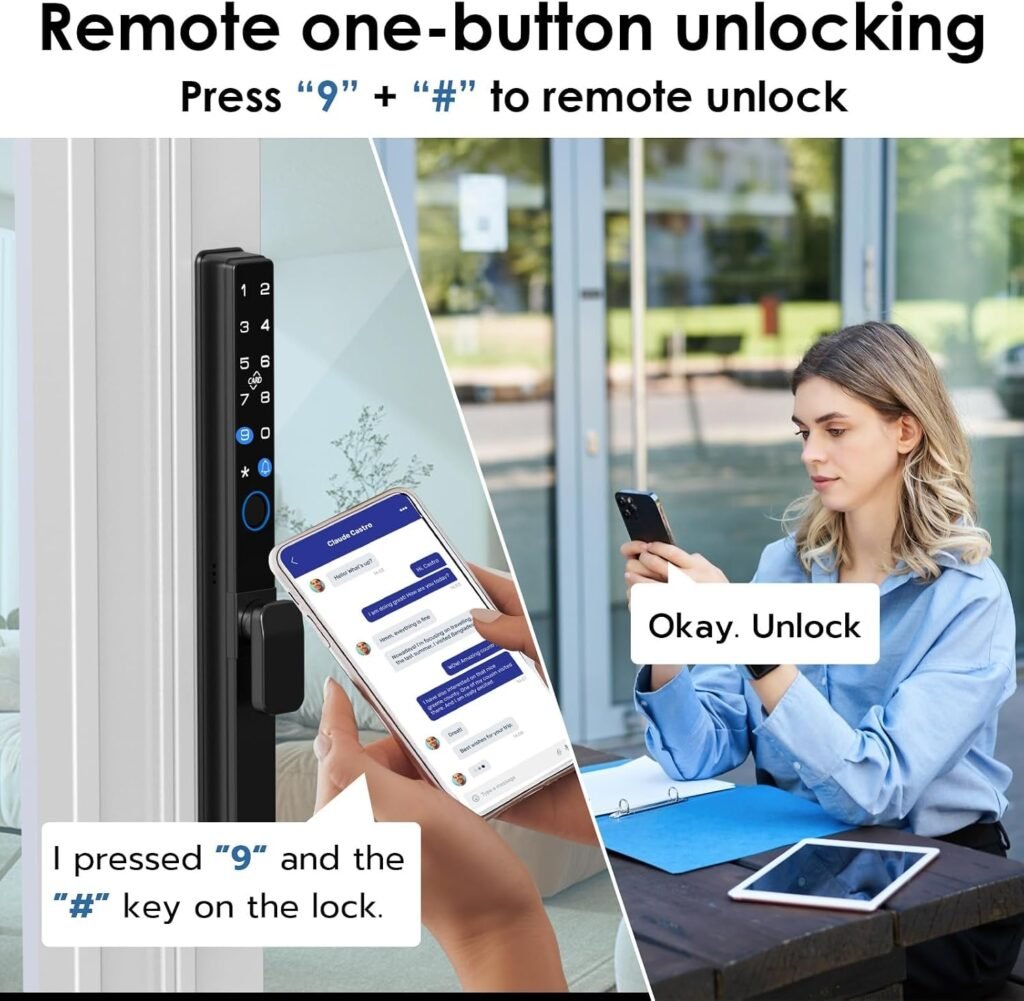
Brand: Dhiedas | Mortise: 2885 double hook | Unlock Methods: 5 (Fingerprint, RFID, Keypad, Bluetooth App, Mechanical Key) | User Capacity: 300 (including 9 admins) | Remote Access: Yes — via Bluetooth without WiFi gateway | One-Time PIN Codes: Yes | Door Thickness: 22–120mm | Emergency Power: USB-C | Battery Life: ~8 months
Why We Picked It
The Dhiedas lock occupies a specific niche that the other options in this guide don’t fully address: remote access without a WiFi gateway. Most smart locks that offer remote access beyond Bluetooth range require either a WiFi gateway hub or direct WiFi connectivity. The Dhiedas enables remote unlock and access management via Bluetooth app without needing any additional hardware — a meaningful practical advantage for homeowners who want remote access capability without extra equipment or ongoing hub costs.
One-time PIN codes are the feature that makes Dhiedas particularly popular with rental property owners. Instead of issuing a permanent code to a guest (which then needs to be deleted after checkout), you generate a one-time PIN that works once and automatically expires. No code rotation required, no risk of a former guest retaining access. For short-term rental management, this single feature justifies the pick on its own.
The 9 admin slots (out of 300 total users) is another rental-property consideration. Most locks offer a single admin account. The Dhiedas allows 9 administrators, meaning multiple property managers, co-hosts, or family members can independently issue and revoke user access without sharing a single master credential.
The double-hook 2885 mortise provides the same strong pry and lift resistance as the Anweller, and the five access methods cover all the standard household scenarios. The ~8-month battery life with USB-C emergency backup is consistent with the other premium options in this guide.
Pros:
- Remote access via Bluetooth without WiFi gateway — no extra hub needed
- One-time PIN codes — ideal for short-term rental guest management
- 9 admin slots for multi-manager property access control
- 300 user capacity
- Double-hook 2885 mortise for strong pry and anti-lift resistance
- 5 unlock methods
- USB-C emergency power with ~8-month battery life
Cons:
- Bluetooth range limits how far from the door remote access works
- 2885 mortise requires compatible door preparation — measure carefully
- IP54 rating — adequate for sheltered patios, not ideal for full weather exposure
- Less established brand with smaller support network
Bottom line: The best smart lock for sliding doors for rental property owners and homeowners who want remote access capability without purchasing a WiFi gateway. One-time PINs and 9 admin slots are features no other lock in this guide offers.
#5 — Mijob Smart Lock Fingerprint Keyless Entry for Sliding Glass Doors
Best for Widest Door Type Compatibility
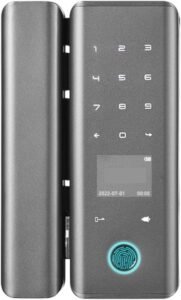
Brand: Mijob | Mortise: 2085 slim | Unlock Methods: 5 (Fingerprint, PIN, IC Card, App, Mechanical Key) | Compatible Door Types: Steel, Wood, Glass, Brass, Stainless Steel | IP Rating: IP66 | Connectivity: Bluetooth + optional app | Emergency Power: USB-C
Why We Picked It
The Mijob smart lock earns its place in this guide for two things that none of the other picks match simultaneously: IP66 weatherproofing (the highest rating in this guide) and the broadest stated door type compatibility, covering steel, wooden, glass, brass, and stainless steel doors explicitly. For homeowners with non-standard door materials or doors in direct exposure to rain and weather, these two specifications make the Mijob the most practical pick.
IP66 vs IP65 vs IP54 — the difference matters for sliding glass doors specifically. IP54 protects against water splashing from any direction. IP65 adds protection against low-pressure water jets. IP66 adds protection against powerful water jets from any direction. For a patio door that’s directly exposed to heavy rain, wind-driven water, or near a pool or outdoor shower, IP66 is the specification that holds up where the others might not.
The 2085 slim mortise body is a narrower profile than the 2885 — making it the right fit for residential aluminum and vinyl sliding doors with narrower stiles where a 2885 mortise body simply won’t fit without modification. Buyers whose doors can’t accommodate the larger 2885 pocket should look at this and the JNZCH as their primary options.
The five unlock methods — fingerprint, PIN code, IC card, app, and mechanical key — are consistent with the other locks in this guide. The app (Bluetooth-connected) enables remote access within Bluetooth range, access history review, and user management. The mechanical key backup provides the last-resort entry option that every smart lock should include.
Pros:
- IP66 weatherproofing — highest rating in this guide, suitable for fully exposed locations
- Widest door material compatibility (steel, wood, glass, brass, stainless steel)
- 2085 slim mortise — fits narrower stiles that can’t accommodate 2885 locks
- 5 unlock methods including fingerprint and app
- USB-C emergency power backup
- Clean modern design
Cons:
- Bluetooth only for app features — no WiFi remote access without optional gateway
- Smaller brand with limited independent review coverage compared to Anweller or Eseesmart
- 2085 mortise limits use on thicker commercial-grade frames (use Anweller or Dhiedas for those)
- Lower user capacity than Eseesmart or Dhiedas
Bottom line: The best smart lock for sliding doors in fully exposed weather conditions and non-standard door materials. IP66 weatherproofing and broad door compatibility make it the pick for challenging installation environments.
Why Sliding Glass Doors Need a Specific Type of Smart Lock
Standard front-door smart locks — the August, Schlage, Yale deadbolt replacements that dominate the category — cannot be installed on sliding glass doors. The reason is mechanical: those locks replace a round deadbolt cylinder that bores through a door panel. Sliding glass doors don’t have that bore, and the aluminum or glass stile is too narrow to accept it.
Sliding glass door smart locks use a mortise-style mechanism instead. The lock body slides into a rectangular pocket cut into the door stile, and a hook bolt (rather than a deadbolt) extends horizontally into a strike in the door frame. The hook shape is critical — it resists both horizontal forcing and vertical lifting attacks that a straight latch bolt cannot stop.
The two standard mortise sizes you’ll see referenced throughout this guide are:
- 2885 mortise — slightly larger pocket, fits thicker door stiles and heavier frames. Better for commercial-grade aluminum frames, Andersen patio doors, and doors requiring deeper engagement.
- 2085 mortise — slim profile, fits the narrower stiles common in residential aluminum and vinyl sliding doors. Generally the right choice for standard US residential patio doors.
Before buying any lock in this guide, measure your door’s stile width, the door panel thickness, and confirm whether your door already has or can accept the relevant mortise size. Every lock in this guide includes a compatibility checklist in its product listing — check it against your measurements before purchasing.
Buyer’s Guide: How to Choose the Best Smart Lock for Your Sliding Glass Door
Step 1 — Measure Your Door Before Anything Else
This is the single most important step and the one most buyers skip. Sliding glass door smart locks are not universally compatible — the mortise size, door thickness, and frame width all determine whether a specific lock can be physically installed on your door.
Measure these three things:
- Door panel thickness — typically 22–40mm for residential vinyl/aluminum, up to 120mm for heavier commercial frames
- Stile width — the width of the vertical edge of the door panel where the lock mounts. Must be at least 45mm for most 2885 locks
- Existing mortise pocket — does your door already have a mortise cut? What size is it? If not, can the stile accommodate one?
If your door has a 2885 mortise pocket already (most commercial-grade aluminum and Andersen patio doors), the Anweller, JNZCH, or Dhiedas all fit. If your door has a narrower stile common in standard residential vinyl sliders, the Mijob’s 2085 slim mortise is the more likely fit.
When in doubt, contact the manufacturer with your measurements before ordering. Every brand in this guide offers pre-purchase compatibility support.
Unlock Methods — Which Ones Do You Actually Need?
All five locks in this guide offer five unlock methods. Here’s how to prioritize for your specific situation:
Fingerprint — The method you’ll use 90% of the time for personal access. Fast, convenient, and no code to remember or share. Enroll multiple fingerprints per person (different fingers) for backup.
PIN keypad — Best for guests, family members, and regular visitors who don’t want to enroll a fingerprint. Use timed access codes for contractors and service providers.
RFID / IC card — Useful for households or offices where card-based access is preferred. The included cards can be copied or additional cards sourced separately.
App (Bluetooth/WiFi) — Essential for remote access when you’re not home, temporary access grants, and access log review. Bluetooth works locally; WiFi (via gateway) enables full remote access from anywhere.
Mechanical key — Always include at least one enrolled backup key stored safely off-site. No smart lock feature matters if a dead battery or electronics failure locks you out without a backup.
IP Rating: What You Actually Need for a Patio Door
IP54 (Anweller, Dhiedas) — Protected against water splashing from any direction. Sufficient for sliding doors under a covered patio or eave where direct rain contact is limited.
IP65 (JNZCH, Eseesmart) — Protected against low-pressure water jets from any direction. Better for doors with partial weather exposure or in moderate rainfall climates.
IP66 (Mijob) — Protected against powerful water jets from any direction. The right choice for fully exposed locations, heavy rainfall climates, or doors near pools or outdoor water features.
Hook Bolt Design: Single vs. Double Hook
Single hook bolt — Standard on most basic sliding door locks. Provides adequate security for everyday deterrence.
Double hook bolt — Engages two points simultaneously (door frame and strike plate). Significantly more resistant to prying and lift-out attacks. The Anweller and Dhiedas both use double hook design — this is worth prioritizing for any door that faces direct break-in risk.
App Connectivity: Bluetooth vs. WiFi
Bluetooth-only — Works within ~30 feet. No ongoing connectivity, no cloud dependency. Best for homeowners who primarily want local app control and access logs.
WiFi (via gateway) — Enables full remote access from anywhere with a phone signal. Required if you want to lock/unlock or issue temporary codes while away from home. The gateway is typically a small hub that plugs into a wall outlet and bridges Bluetooth to your home WiFi network.
For rental property owners or frequent travelers who need to manage access remotely, a WiFi gateway is a worthwhile investment. For standard residential use, Bluetooth is sufficient for most access management needs.
Frequently Asked Questions
Can you put a smart lock on a sliding glass door?
Yes — but only with a lock specifically designed for sliding glass doors. Standard front-door smart locks (August, Schlage, Yale deadbolt replacements) cannot be installed on sliding glass doors because they require a round deadbolt bore that sliding doors don’t have. Sliding glass door smart locks use a mortise-style hook bolt that fits into the door stile rather than boring through it.
What is the best smart lock for sliding glass doors?
The Anweller 2885 is the best overall for most homeowners — five unlock methods, double-hook mortise security, tamper alarm, and an 8-month battery life make it the most complete package. For rental properties or vacation homes, the Eseesmart’s 300-user capacity and 15,000-cycle durability or the Dhiedas’s one-time PINs and 9 admin slots are better fits.
What is a 2885 mortise lock?
A 2885 mortise lock refers to the standard size of the rectangular pocket (mortise) cut into the door stile that the lock body slides into. The 2885 designation indicates the specific dimensions of that pocket. Most commercial-grade aluminum frame sliding doors and many heavier patio doors accept a 2885 mortise. The 2085 is a slimmer variant that fits narrower stiles common in standard residential vinyl sliding doors.
Do sliding glass door smart locks work without WiFi?
Yes — all five locks in this guide work without WiFi for local access methods (fingerprint, PIN, RFID card, mechanical key, and Bluetooth app within range). WiFi connectivity via an optional gateway is only required for full remote access and management from outside Bluetooth range.
How do you secure a sliding glass door from being lifted off the track?
A double-hook mortise lock (like the Anweller or Dhiedas) directly addresses lift-off attacks by engaging both the door frame and the strike plate simultaneously. Additionally, anti-lift blocks or a security bar placed in the track provides a secondary physical barrier against both sliding and lifting attempts. Both layers together provide the most complete protection against this attack method.
How long do sliding door smart lock batteries last?
Most locks in this guide achieve approximately 8 months of battery life under normal residential use patterns. High-frequency use (rental properties with multiple daily entries) will drain batteries faster. All locks in this guide include a low-battery alert that notifies you before the battery dies, and USB-C emergency power lets you access the door with a power bank if the battery runs out before you replace it.
Is fingerprint recognition reliable on sliding door smart locks?
Based on independent testing across multiple review sites in 2026, all five locks in this guide achieve approximately 90–95% first-attempt fingerprint recognition under normal conditions. Recognition can be slightly reduced in very cold temperatures or when fingers are wet. For backup access in those conditions, PIN or RFID card access works reliably regardless of temperature or moisture.
What door thickness do sliding glass door smart locks fit?
Most locks in this guide fit door thicknesses from 22mm to 120mm, which covers virtually all residential sliding glass doors. The Mijob (2085 slim mortise) is optimized for the thinner end of that range. The Anweller 2885 handles the full range from 22mm to 120mm. Always verify your specific door’s thickness against the manufacturer’s published compatibility range before purchasing.
…> Smart Locks Compatible with Siri: 5 Locks Worth Trusting on Your Front Door
- best smart lock for sliding glass door 2026
- sliding door fingerprint lock
- patio door smart lock keyless entry
- sliding door lock with app control
- 2885 mortise smart lock
- best keyless lock for sliding patio door
- fingerprint sliding door lock
- sliding glass door lock with Bluetooth
- best electronic lock for sliding door
- sliding door lock with remote access
- smart lock for aluminum sliding door
- patio door biometric lock
- best sliding door lock for rental property
- sliding glass door deadbolt replacement
Affiliate Disclosure: Buyer’s Guide Pro is a participant in the Amazon Services LLC Associates Program. We may earn a small commission when you purchase through links on this page, at no extra cost to you. We only recommend products we believe deliver real value to our readers.