Tested Picks for Every Budget and Pool Type
Fine sand and dirt are the hardest debris a pool vacuum has to deal with — not because they’re heavy, but because they’re small enough to drift right past a weak filter and get kicked back into the water instead of actually getting removed. A vacuum that handles leaves just fine can completely fail at sand, leaving your pool floor with that gritty, hazy film no amount of skimming fixes. A pump and filter alone were never built to scrub that off a floor or pull it out of a corner. That’s where a dedicated pool vacuum for sand and dirt comes in — and which one you need depends heavily on your pool, your filtration needs, and your budget.
We spent weeks comparing specs, reading manufacturer documentation, and cross-referencing real owner feedback across robotic, suction-side, pressure-side, and manual models — paying particularly close attention to filtration ratings and fine-debris performance — to put together this guide. Below, you’ll find our top picks in six categories for the best pool vacuum for sand and dirt, plus a full breakdown of how each type of vacuum works so you can figure out which one actually fits your pool.
5 Best Pool Vacuums for Sand and Dirt (For Quick Selection)
How We Evaluated These Vacuums
Before getting into picks, it’s worth explaining what we actually weighed — and since this guide is specifically about handling sand and dirt, filtration quality carried more weight here than it would in a general-purpose roundup:
- Fine-debris filtration — this was our top priority. Sand and dirt are small enough to pass straight through a loose mesh filter and get pumped right back into the water; we prioritized models with documented micron ratings low enough actually to capture them.
- Suction strength — fine particles that have settled into corners or grout lines need real pull to dislodge, not just surface-level suction.
- Cleaning coverage — does it just vacuum the open floor, or does it reach corners, steps, and the waterline where sand and dirt tend to accumulate?
- Navigation — random-pattern bots tend to leave gaps where fine debris resettles; mapped or sensor-guided navigation covers a pool more evenly in less time.
- Build quality and warranty length — a pool robot lives in a harsh chemical environment, so motor housing and seal quality matter more here than in almost any other home appliance category.
- Price relative to category — we tried not to compare a $200 handheld against a $1,200 robot on the same curve. Each pick is judged against realistic competitors in its own price band.
1. Best Overall Pool Vacuum for Sand and Dirt: Dolphin Premier
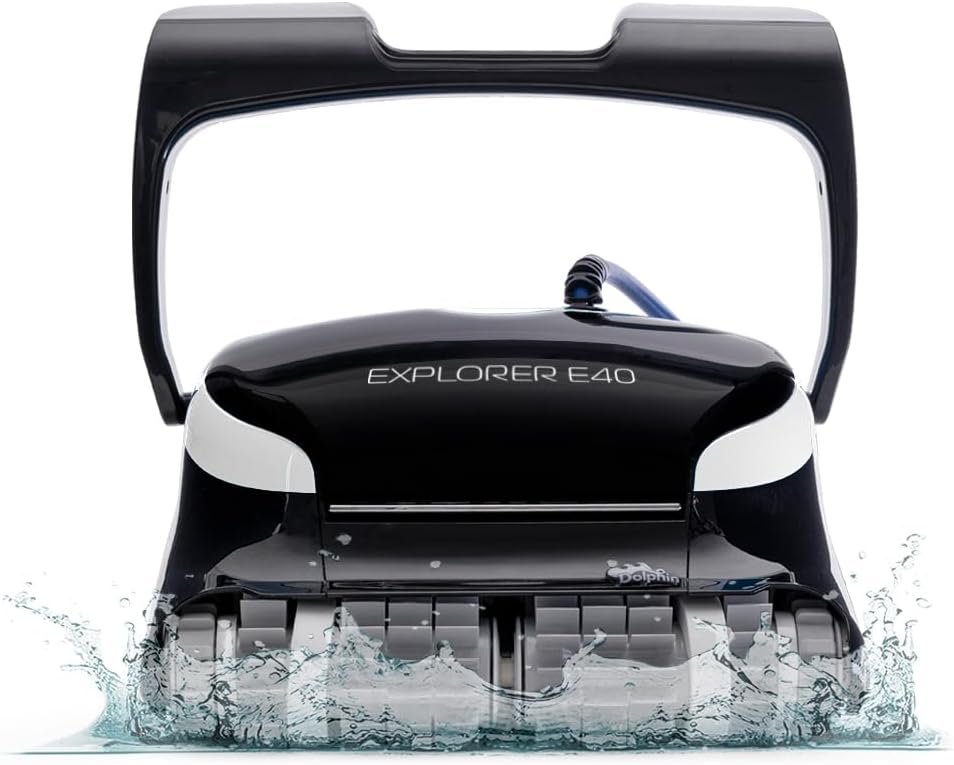

Type: Robotic | Best for: In-ground pools up to 50 ft | Filtration: Multi-Media (NanoFilters, leaf bag, or standard cartridges) | Warranty: 3 years
If you’re specifically dealing with sand and fine dirt — not just leaves and surface debris — this is the pick to start with. The Dolphin Premier has built a reputation as one of the most fully-featured robotic cleaners on the market, and after comparing it against more than a dozen competitors, its filtration system is what consistently puts it ahead for fine-particle cleanup.
What sets the Premier apart isn’t a single headline feature — it’s that it doesn’t force you to compromise. Most robotic cleaners make you pick: fine filtration or large-debris capacity, but not both. The Premier ships with four interchangeable filtration options, including an oversized leaf bag for heavy-debris seasons and ultra-fine cartridges that are specifically suited to fine particles like sand and dirt, so you can swap based on what your yard is throwing at the pool that week.
It runs on a pair of commercial-grade motors borrowed from Maytronics’ commercial pool robot line — the kind used to maintain hotel and campground pools — which translates into noticeably stronger wall-climbing and waterline scrubbing than you’d expect at this price point. Gyroscopic navigation maps your pool rather than bouncing around randomly, so it covers floor, walls, and waterline in a single cycle instead of needing multiple passes.
Why it’s worth the price: A 3-year warranty is long for this category, and the motor platform is genuinely a step up from typical residential bots — that’s not a value judgment we say loosely about pool equipment.
Watch out for: It’s a corded model, which some buyers find less convenient than cordless options, though corded robots consistently test stronger on suction and runtime. It’s also a premium price point — if that’s a stretch, see our budget pick below.
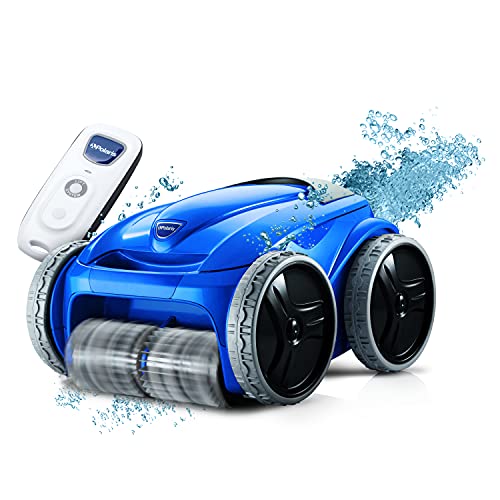
2. Best for Large or Irregular Pools: Polaris VRX iQ+
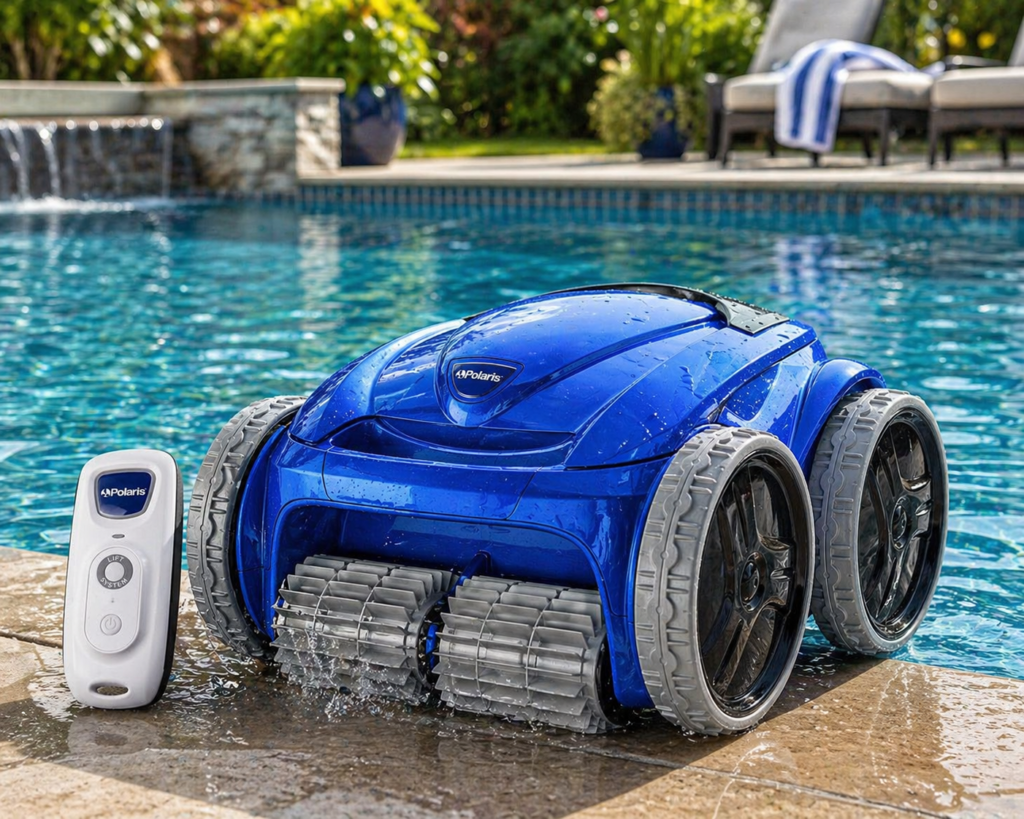
Type: Robotic | Best for: Large in-ground pools, L-shaped or freeform designs | Cable: 70-ft insulated cord | Filtration: Dual-chamber
Bigger pools punish weak robots. A vacuum that handles a rectangular 14×28-foot pool just fine can completely lose the plot in a 450+ square foot freeform design with varying depth, ledges, and tight transitions. The Polaris VRX iQ+ is built specifically for that kind of complexity, and in side-by-side testing against other premium robots, it’s consistently been rated as leaving the cleanest floor of any model tested — full stop, not just “for its price.”
The tradeoff is the 70-foot cord connecting the robot to an external control unit. It’s not elegant, and storing/managing the cable is genuinely the most common complaint about this machine. But that cord is also part of why it performs the way it does — a wireless or battery-powered robot can’t sustain the same suction power or runtime over a multi-hour cleaning cycle.
If your pool is large, has an unusual shape, or sees heavy debris load from nearby trees, this is the vacuum that’s least likely to leave you doing a manual touch-up pass afterward.
Why it’s worth the price: It’s expensive, but you’re paying for cleaning performance that’s difficult to find anywhere else in the category, particularly on pools that other robots struggle to map fully.
Watch out for: The external power supply and long cord mean less “set it and forget it” convenience than a self-contained cordless bot. It’s also overkill for a small, simple rectangular pool — save the money and look at our overall pick instead.
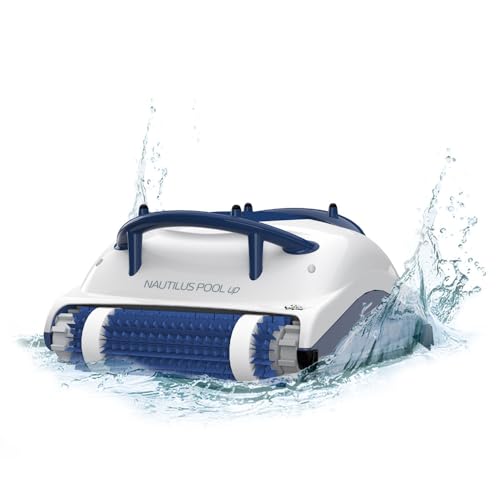
3. Best Budget Robotic: Dolphin Nautilus CC Automatic Robotic Pool Vacuum Cleaner
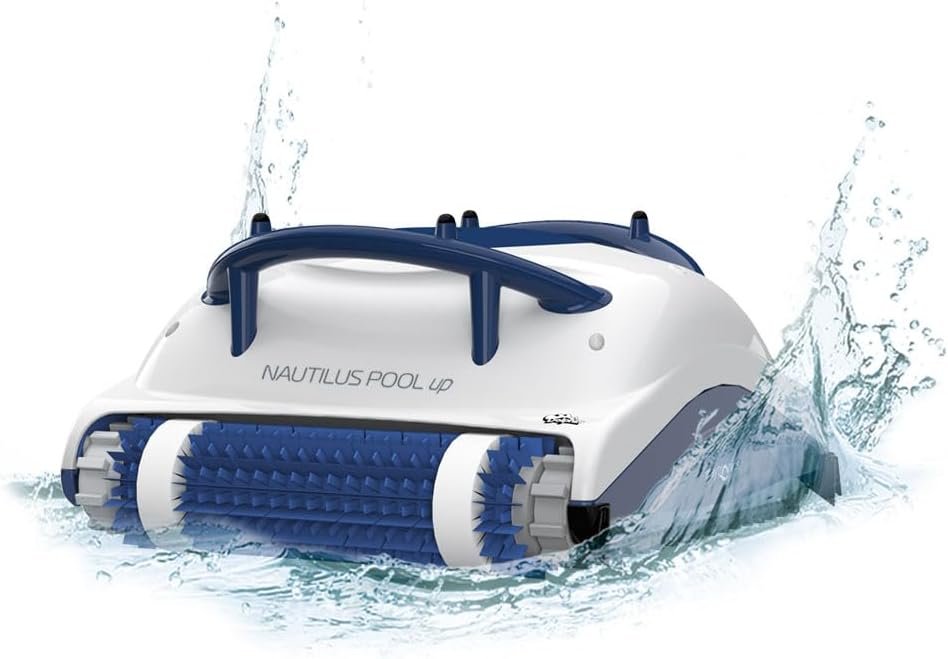
Type: Robotic | Best for: Standard in-ground pools, budget-conscious buyers | Filtration: Top-load cartridges | Suction: ~4,000 GPH
Robotic vacuums have a reputation for being the expensive option, and a few years ago, that reputation was earned. That’s changed. The Dolphin Cayman now sits in the $400–$500 range and, according to multiple independent testers who’ve run it against pricier competitors, performs noticeably above its price class.
Two motors deliver roughly 4,000 gallons per hour of suction — modest compared to flagship models, but a meaningful jump over budget robots from just a couple of years ago, most of which hovered closer to 1,000 GPH. It also includes a weekly programmable timer, a feature several manufacturers have started cutting from their entry-level models to push buyers toward pricier tiers. Having scheduled automatic cleanings without paying a premium for them is a genuine value here.
Top-loading filters make weekly maintenance quick — lift, rinse, drop back in — and the unit climbs walls competently for a budget bot, even if it’s not quite as confident on steep slopes as the pricier Premier.
Why it’s worth the price: You’re getting features — a real timer, dual motors, wall climbing — that used to require spending nearly double.
Watch out for: Filtration is solid but not best-in-class; very fine particles like algae spores can occasionally slip through. If your main concern is water clarity in a heavily shaded or algae-prone pool, the extra cost of a NanoFilter-equipped model may pay for itself.
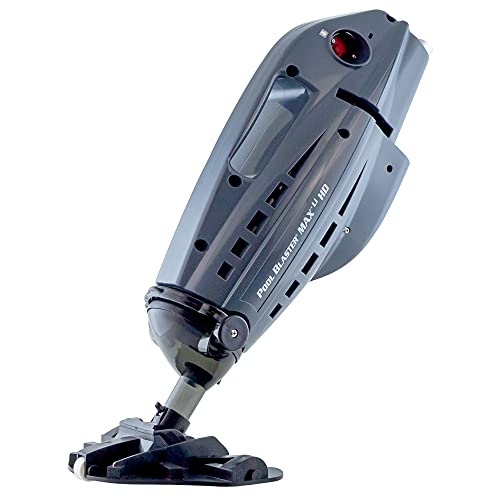
4. Best Manual/Handheld: Pool Blaster Max Li-HD
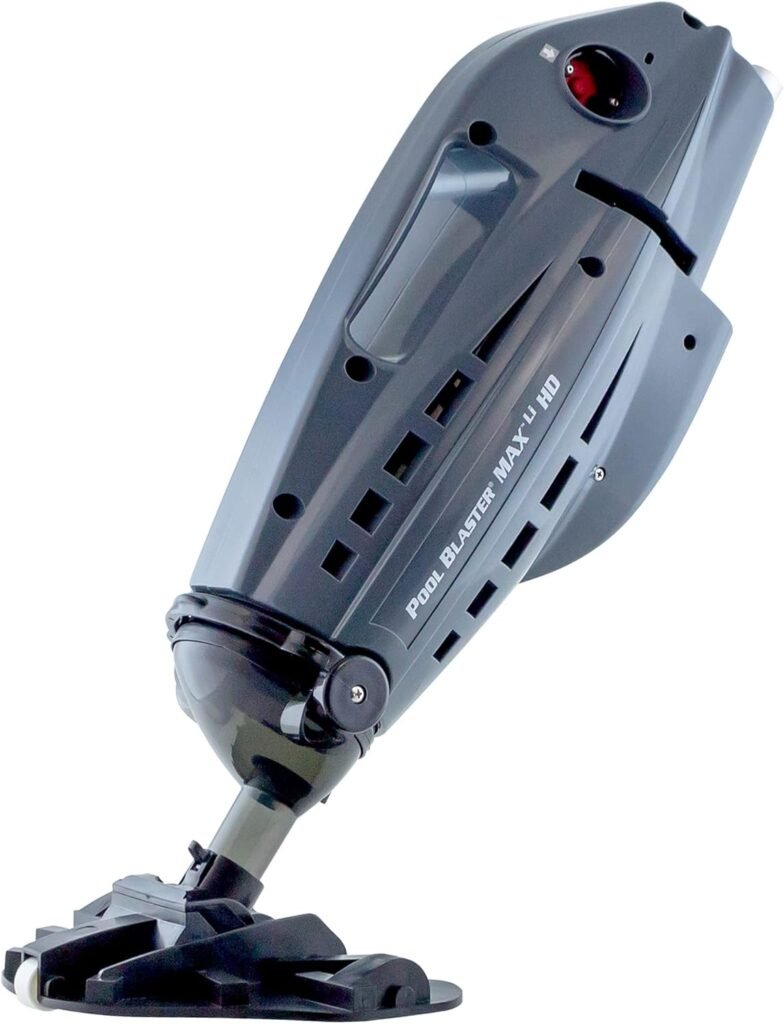
Type: Cordless handheld | Best for: Spot cleaning, small pools, hot tubs | Runtime: Up to 60 minutes | Weight: ~5.5 lbs
Not everyone needs (or wants) a robot patrolling their pool every day. If you’ve got a smaller pool, only need occasional touch-ups, or just want a no-fuss backup tool for the spots your automatic cleaner skips, a handheld vacuum like the Pool Blaster Max Li-HD covers those needs at a fraction of the cost.
It runs on a rechargeable lithium battery rather than a cord or hose, so there’s nothing to untangle and nothing tying you to the pool’s pump. One owner who put it through repeated use across in-ground pools, above-ground pools, and even a few fountains described being genuinely impressed by how consistently it performed across all of them, which tracks with the broader feedback pattern for this product line. A wide vacuum head and multilayer filter bag mean it handles everything from fine sand to small leaves without constant clogging, despite the compact size.
It’s manual, which means you’re doing the steering — this isn’t a “drop it in and walk away” tool. But for spot-cleaning a corner after a windstorm, or doing a full clean on a smaller pool, it’s hard to beat the simplicity.
Why it’s worth the price: Strong suction and real battery runtime in a genuinely portable, cordless package — most handhelds in this price tier compromise on one or the other.
Watch out for: The telescopic pole usually isn’t included and has to be bought separately — factor that into your actual cost before checking out.
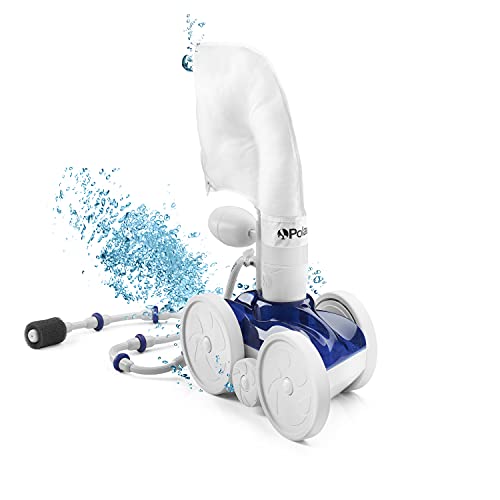
5. Best Pressure-Side: Polaris Vac-Sweep 280
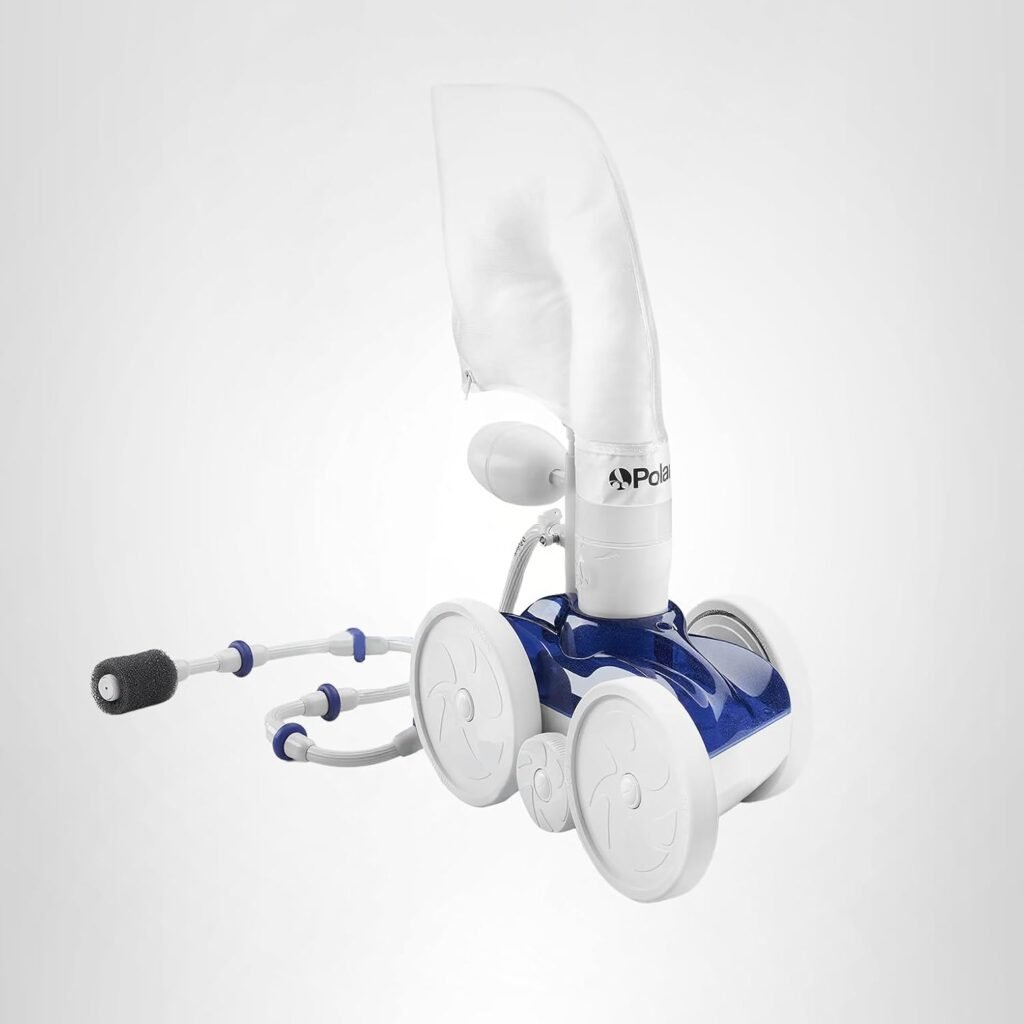
Type: Pressure-side | Best for: In-ground pools with heavy leaf/debris load | Requires: Dedicated booster pump | Filter: Single-chamber debris bag
Pressure-side cleaners have fallen out of fashion as robotic vacuums have gotten cheaper and smarter, but they haven’t disappeared — and for one specific situation, they’re still genuinely the better tool: pools that deal with a heavy, ongoing load of larger debris like leaves and acorns from overhanging trees.
The Vac-Sweep 280 is a long-running model in this category for a reason. Because it collects debris in its own separate bag instead of routing everything through your pool’s main filtration system, it can handle a much higher volume of large debris without clogging or straining your pump — which matters a lot if you’re cleaning up after every storm rather than just doing routine maintenance. Owners who’ve run this exact model for over a decade report it holding up reliably with basic seasonal care, which says something about long-term durability in a category not always known for it.
It does require a dedicated booster pump, which is an added cost and installation step compared to a robotic vacuum that just needs a power outlet. But once it’s set up, it runs largely unattended, working through a full cleaning cycle in under three hours on most pools.
Why it’s worth the price: Genuinely excellent for high-debris-load pools, and the separate collection bag protects your main filter system from extra strain — a real cost-saver over time.
Watch out for: You’ll need a booster pump if you don’t already have one, which adds to the upfront cost. There’s also no indicator for when a cleaning cycle finishes — you just check the pool.
Best for Above-Ground Pools: AIPER Seagull SE 2025 Cordless Robotic Pool Vacuum
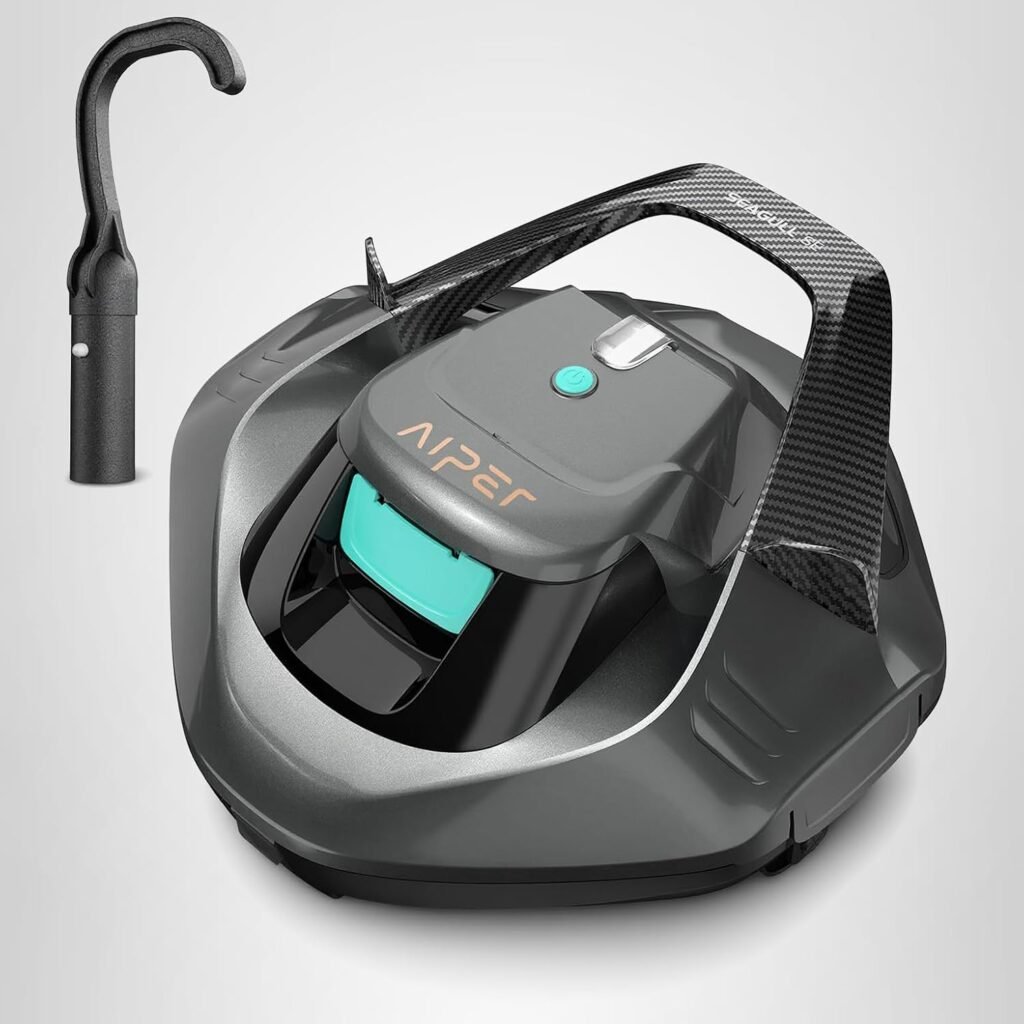
Type: Robotic, cordless | Best for: Above-ground pools up to 33 ft | Filtration: Dual-stage (down to 0.3 microns) | Runtime: ~2 hours per charge
Above-ground pools have flatter bottoms, no deep-end transitions, and generally simpler geometry than in-ground pools — which means they don’t need (and shouldn’t pay for) the navigation complexity of a premium in-ground robot. They do, however, still need real filtration, and that’s where a lot of budget above-ground vacuums fall short.
The Aiper Scuba E1 is fully cordless and lightweight enough to lift in and out without effort, which matters more for above-ground pools where storage and easy removal tend to be bigger priorities than wall-climbing ability. Its dual-stage filtration is the real standout: a fine filter for everyday debris paired with an ultra-fine stage rated down to 0.3 microns, which is small enough to catch algae spores and fine particulates that plenty of competing models simply let pass through.
Navigation is more basic than premium in-ground bots — it moves in a semi-randomized pattern rather than mapping the pool — but for the flat, simple geometry of most above-ground pools, that’s a non-issue in practice. A roughly two-hour runtime comfortably covers most above-ground pool sizes in a single charge.
Why it’s worth the price: You’re getting genuinely fine filtration and cordless convenience without paying for in-ground-pool features you don’t need.
Watch out for: No app control or scheduling, and no completion alert — it parks itself near the wall when done, but you won’t get a notification.
How to Choose the Right Pool Vacuum
1. Start With Your Pool Type
This is the single biggest factor. In-ground and above-ground pools have different structural demands — above-ground pools generally have flatter, simpler floors, while in-ground pools often include steps, slopes, and varied depths that some vacuum types handle better than others. If your pool has a steep transition between shallow and deep ends, suction-side cleaners in particular tend to struggle climbing it; robotic and most pressure-side models handle slopes and irregular shapes far more reliably.
2. Understand the Three (Plus One) Main Categories
Robotic vacuums operate completely independently of your pool’s pump and filtration system. They have their own motor, their own filter, and typically scrub walls and waterlines in addition to floors. They cost more upfront but tend to be more durable, more thorough, and put zero extra strain on your existing pool equipment. If your pump ever fails, a robotic vacuum is also the only type that can still circulate water in the meantime.
Suction-side vacuums connect to your pool’s skimmer or a dedicated suction line and rely on your existing pump for power. They’re the cheapest automatic option but also the least durable over time, and because they run through your pool’s filtration system, they add wear to your pump and filter. They also tend to struggle with larger debris and steep pool transitions.
Pressure-side vacuums use water pressure (usually from a separate booster pump) to move around and collect debris in their own bag rather than sending it through your main filter. They’re particularly good at handling large debris loads like heavy leaf-fall, but they’ve become less common as robotic vacuums have gotten more affordable and capable.
Manual/handheld vacuums are exactly what they sound like — you’re doing the steering, either with a pole-mounted hose vacuum or a cordless handheld unit. They’re the cheapest option by far and the best fit for spot-cleaning or smaller pools, but they’re labor-intensive for full-pool cleaning.
3. Corded vs. Cordless Robots
This one comes down more to preference than performance, though it’s worth knowing the tradeoffs. Cordless robots offer obvious convenience — no cable to manage, easier storage — but corded models still tend to edge out cordless ones on raw suction power and runtime, since they’re not constrained by battery capacity. Cordless models also rely on lithium-ion batteries, which adds a long-term consideration around battery degradation and (in rare cases) recall risk, something the CPSC has flagged for at least one cordless pool vacuum model in recent years. Neither is wrong — it depends on whether you prioritize convenience or maximum performance.
4. Match Filtration to Your Actual Debris
If your pool sits under trees, prioritize a vacuum with strong, large-debris capacity — a pressure-side cleaner or a robot with an oversized leaf bag/basket. If your main issue is fine dirt, pollen, or algae rather than leaves, look specifically for documented micron ratings on the filter; a lot of marketing copy says “fine filter” without ever specifying what that actually means in microns, and the difference between a 180-micron filter and one rated to 1 micron is enormous in terms of what actually gets captured versus recirculated.
5. Don’t Skip Storage and Maintenance
It’s tempting to just leave a robotic vacuum in the pool full-time, but most manufacturers and pool professionals recommend taking it out when it’s not actively running a cycle, especially in areas with hard water or high calcium content — prolonged submersion can accelerate wear on seals and housings. Rinsing filters after every cycle (not just when they look full) also meaningfully extends the lifespan of fine-mesh and cartridge filters.
Frequently Asked Questions
What’s the best pool vacuum for sand and dirt specifically?
Look for a model with a documented fine or ultra-fine filter rating — ideally in the 1–5 micron range — rather than just marketing language like “fine filter.” Robotic vacuums with NanoFilter-style cartridges (like our top pick, the Dolphin Premier) or dual-stage filtration (like the Aiper Scuba E1 for above-ground pools) are specifically built to trap particles that small instead of recirculating them back into the water.
Do I really need a robotic vacuum, or is suction-side good enough?
It depends on budget and how hands-off you want to be. Suction-side vacuums are cheaper and fine for light-duty maintenance on simple pool shapes, but they add wear to your existing pump, struggle with larger debris, and generally don’t last as long. If you can stretch the budget, a robotic vacuum is the more durable, more thorough long-term choice.
How often should I run my pool vacuum?
Most robotic vacuums are designed to run 2–3 times a week for routine maintenance, though pools under heavy tree cover may need daily cycles during peak leaf-drop season. Manual/handheld vacuums are better suited to as-needed spot cleaning rather than a fixed schedule.
Can a pool vacuum replace my filtration system?
No — a vacuum (robotic or otherwise) handles debris that settles on surfaces; your pump and filter handle ongoing water circulation and chemical filtration. They work together, not as substitutes for each other.
Are cordless robotic vacuums as powerful as corded ones?
Generally, no. Corded models consistently test with stronger suction and longer effective runtime since they’re not limited by battery capacity. However, the gap has narrowed as battery and motor technology have improved in recent cordless models.
What’s the actual difference between a “fine” filter and an “ultra-fine” filter?
It comes down to micron rating — literally, how small a particle the filter can physically trap. A standard fine filter might catch particles down to 180 microns (roughly the size of fine sand), while an ultra-fine or nano-filter can capture particles as small as 1 micron or less, which is what’s needed to catch algae spores and fine pollen before they cloud your water.
Related: 5 Best Pool Vacuum for Inground Pool with Deep End
Prices and availability for products mentioned in this guide are subject to change. We may earn a commission on purchases made through links in this article.
Last update on 2026-05-05 / Affiliate links / Images from Amazon Product Advertising API