If you’re looking for headphones that free your ears and keep you tuned in—for your music and your surroundings—then bone conduction headphones are a seriously compelling option. These open-ear designs send sound through the bones of your skull (typically the cheekbones or temples) into the inner ear, allowing you to hear ambient noise at the same time. (Wikipedia)
Below I’ve put together a deep dive on 10 of the best bone conduction headphones currently available — why each is worth considering, the kinds of users they’re ideal for, and helpful tips. Whether you’re a runner, cyclist, commuter, or just someone who hates earbuds jammed in your ears, there should be something here for you.
Top 5 Best Bone Conduction Headphones


✅ Why bone-conduction headphones may be a great fit
Before we jump into models, let’s cover why you might pick bone conduction and what trade-offs to expect. That way you’ll understand the value behind these picks.
👍 Benefits
- Situational awareness: Because your ear canals are open, you can still hear traffic, announcements, conversations. Perfect for outdoor runs, cycling, commuting. (Tom’s Guide)
- Comfort / ear health: No in-ear buds plugging your canal, no earphones pressing against or into your ears. That can be helpful if you dislike traditional buds or have ear-canal discomfort.
- Good for certain hearing profiles: Because these bypass the eardrum/middle-ear somewhat, they’ve been used in hearing-aid contexts (though consumer models aren’t medical devices). (Live Science)
- Sweat / weather friendly: Many models are built for sports/outdoor use, resistant to splash/sweat, and designed to stay on during movement.
Check it: 5 Best Wireless Headset with Noise-Cancelling Microphone
⚠️ Trade-offs
- Sound quality (especially bass) isn’t the same as over-ear or good in-ear headphones. As one expert puts it: “They generally lack strong bass and immersive sound.” (Live Science)
- Sound leakage: Because the transducers vibrate through bone and your ears are open, other people may hear faintly what you’re listening to.
- Fit is critical: If the transducer pads don’t sit properly on the skull bones, you’ll lose fidelity or the audio will feel weak.
- Power / battery trade-off: Driving bone-conduction transducers sometimes uses more power; fit, material and design impact how well you’ll hear in noisy environments.
- Not ideal for deep bass or immersive listening: If you’re after cinema-style music immersion or ultra-deep bass, traditional closed headphones may still win.
Read: 7 Best Rated Wireless Headphones for iPhone
🧭 Who is this especially good for?
- Runners, cyclists or outdoor active users who need to stay aware of surroundings.
- Commuters who want to listen without isolation, hearing announcements or ambient sound.
- People who dislike ear-buds in canals or feel discomfort with standard headphones.
- Those who want to listen while still being able to talk to others / hear ambient cues.
🔍 What to check when choosing
- Fit / comfort: Does the band sit snug but not painfully on your head? Is it secure during movement?
- Water / sweat resistance (IP rating): Especially for outdoors or gym use.
- Battery life: How many hours of playback? How fast it charges?
- Sound quality: Especially mid/treble clarity, since bass may be limited.
- Use case: Running? Swimming? Calls? Daily commuting?
- Brand & support: Good reviews, firmware updates, good return/fit policies help.
10 Best Bone Conduction Headphones: Review one by one
Now let’s dive into 10 of the best bone conduction headphones, each with a detailed look — what makes them stand out, any caveats, and who will benefit most.
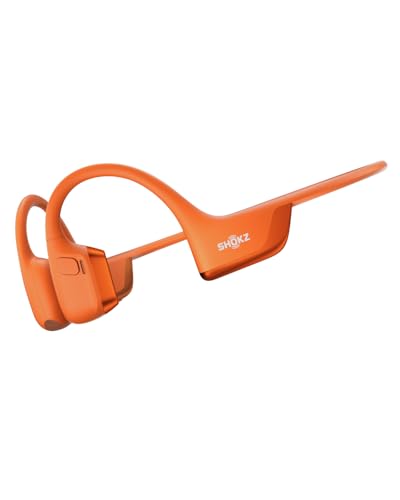
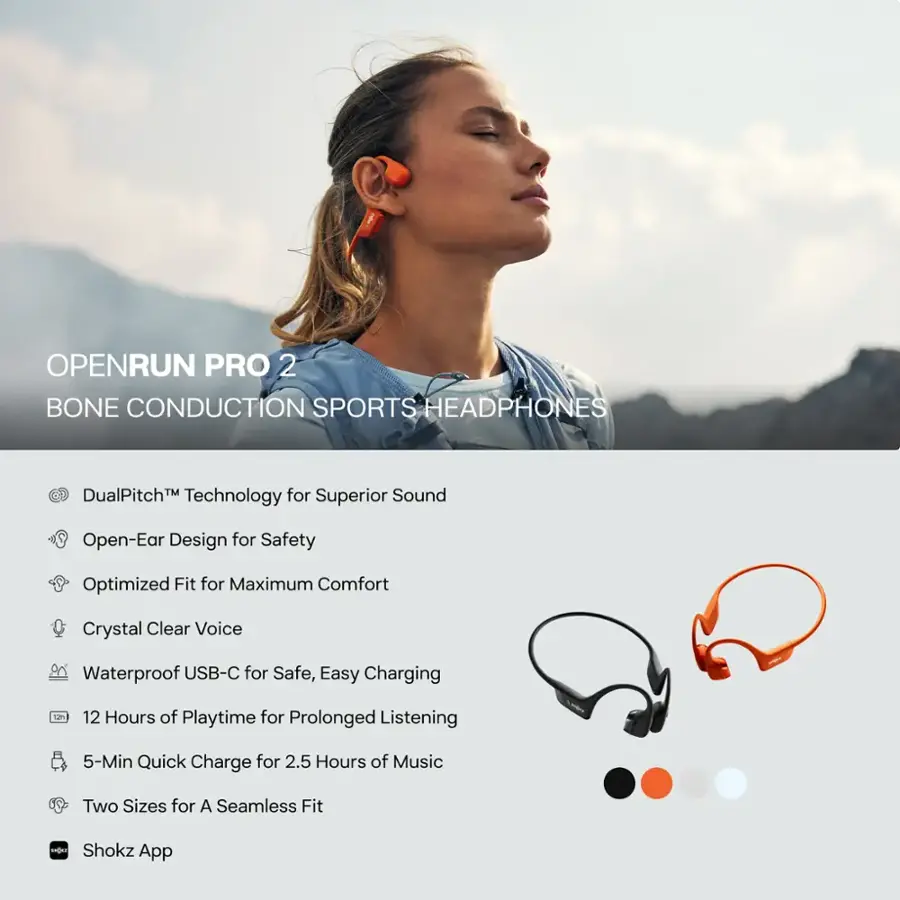
1. Shokz OpenRun Pro 2


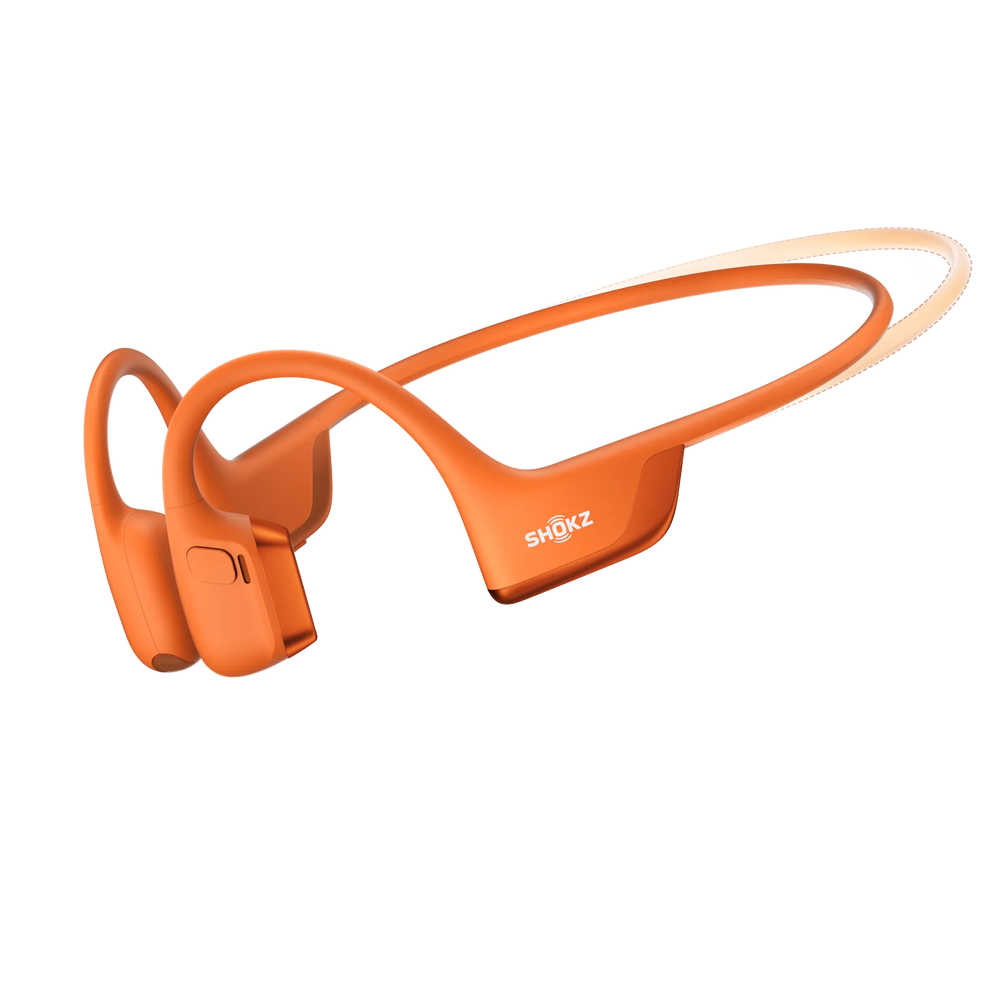

Why it stands out:
- Described as the best bone conduction headphones for most people in 2025. (Tom’s Guide)
- Features hybrid design: bone conduction + air-conduction speaker unit to enhance bass and clarity. For example, they say “They won’t produce skull-shaking bass but they sound as full as a set of standard earbuds” in a review. (The Guardian)
- Good battery life (~12 hours) and fast charging. (TechRadar)
- Secure fit for runners/cyclists, with open-ear safety built in.
Caveats:
- Premium price (higher than simpler models).
- Bass still not as deep/adventurous as closed headphones.
- Open-ear means more ambient sound—good for safety, less for isolation.
Who it’s for:
If you do a lot of outdoor training (running, biking) and want a premium open-ear experience with very good sound + safety awareness. Great all-rounder if your budget allows.
2. Shokz OpenRun





Why it’s good:
- A slightly more budget-centric Shokz model but still high quality. From Tom’s Guide: “They’re fraction lighter … comfortable to wear for hours.” (Tom’s Guide)
- Great for running, long sessions, endurance, thanks to lightweight fit.
Caveats:
- Sound quality is a step down from the Pro 2; may struggle more in noisy environments. (Tom’s Guide)
- Less bass, like most bone conduction sets.
Who it’s for:
If budget is a concern but you still want the high-quality brand and safe open-ear experience. Runs/commutes frequently.
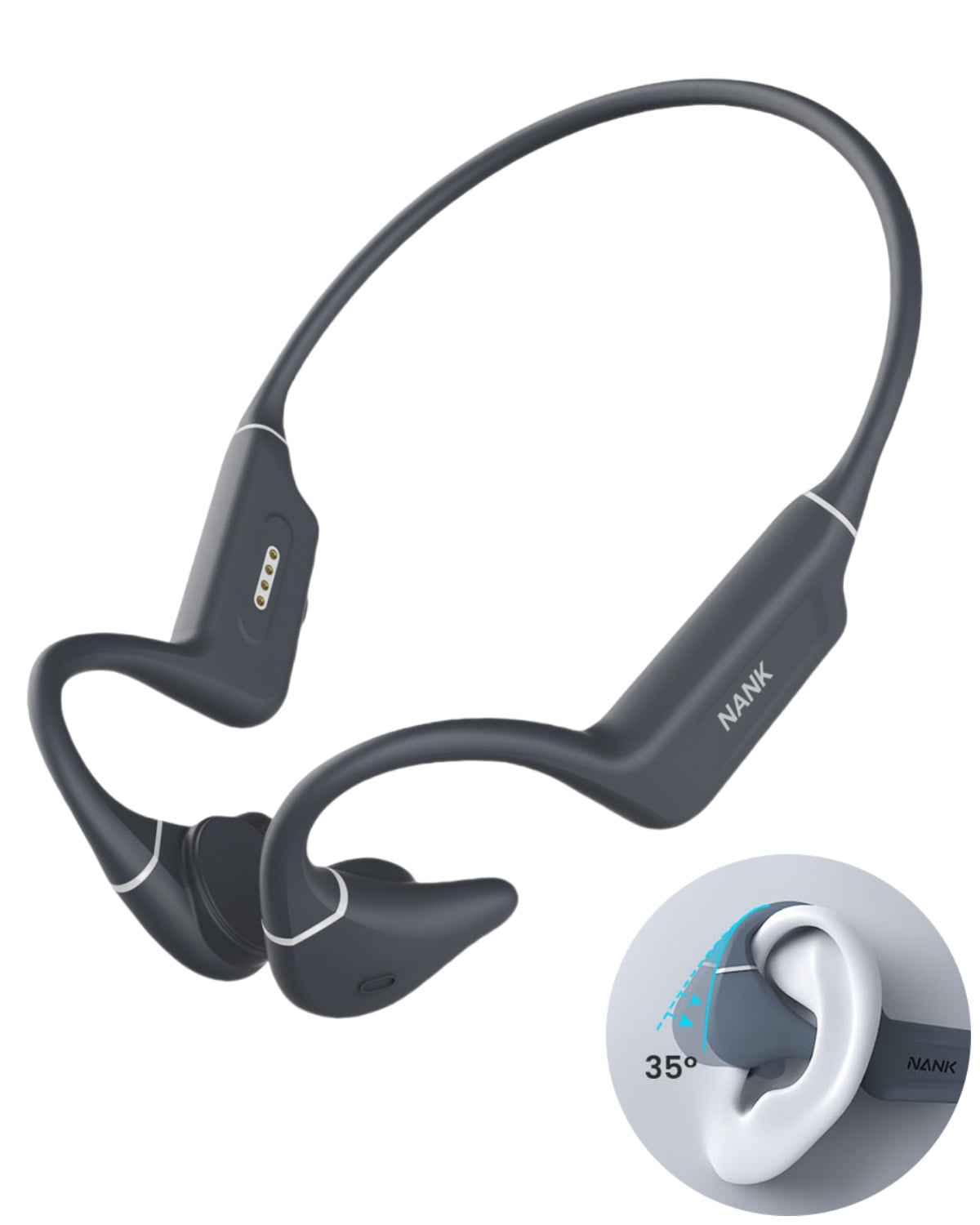
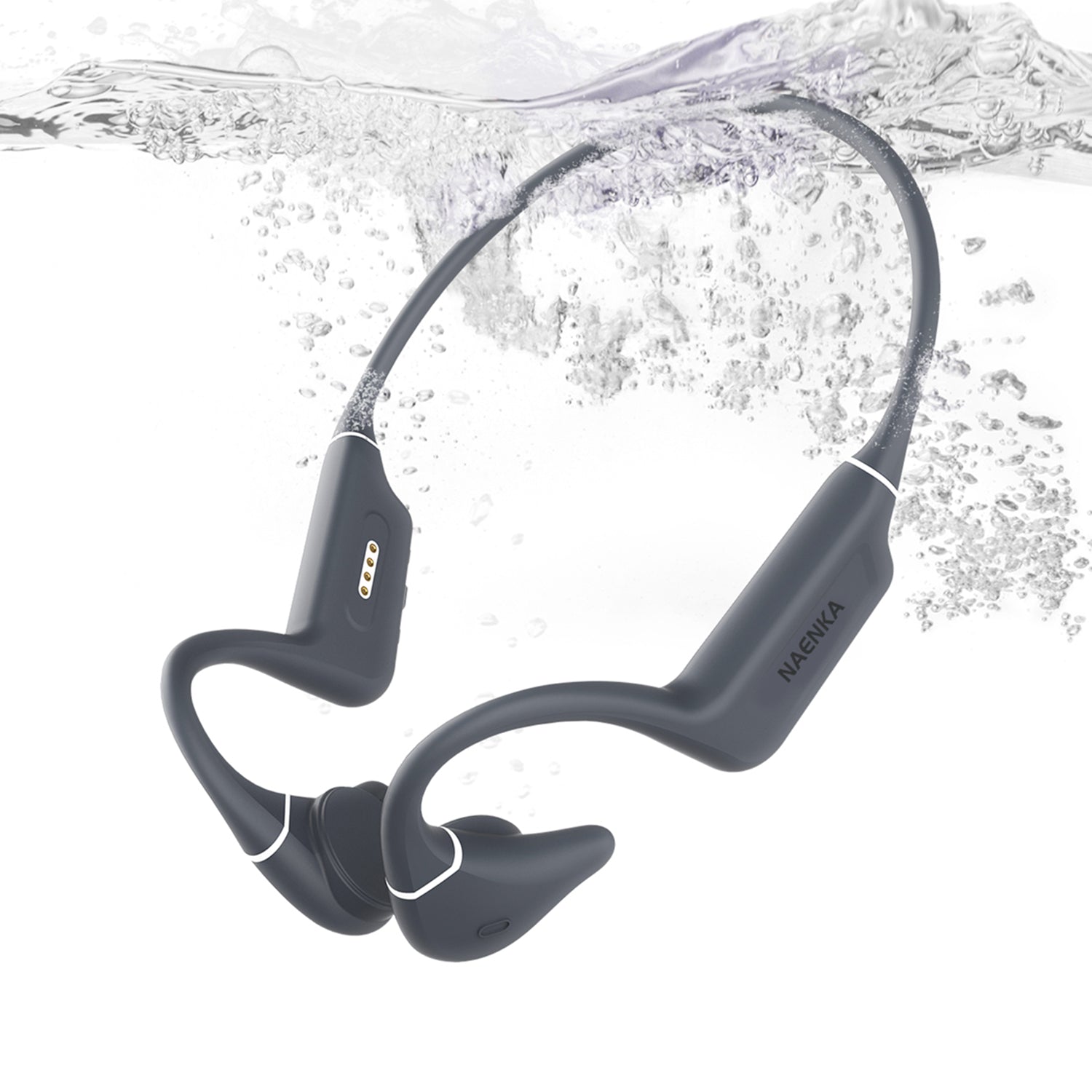
3. Naenka Runner Diver2 Pro


Why it stands out:
- Exceptional waterproof rating: IP69. That is among the highest for bone conduction models, making it ideal for swimming and multi-sport use.
- Onboard storage (32 GB) for MP3 playback (important underwater since Bluetooth often doesn’t work underwater). (Amazon)
- Built for rigorous outdoor/sport use.
Caveats:
- Still bone conduction—so bass & immersive sound will have the usual trade-offs.
- Price is higher than standard models due to waterproofing & features.
Who it’s for:
Swimmers, triathletes, or people who need rugged gear for both land & water. If you train outdoors in all conditions or want to swim with music.
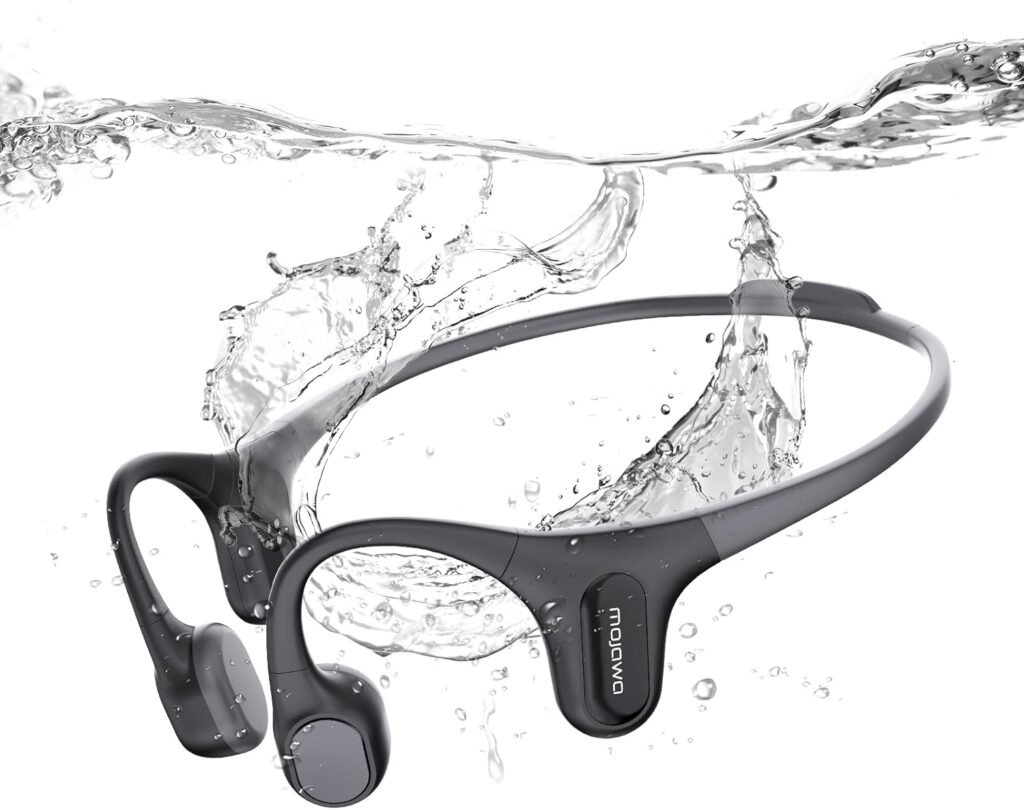
4. mojawa Run Plus Bone Conduction Headphones

Why it’s good:
- Budget-friendly entry into bone conduction.
- IP67 water/sweat resistance; CVC dual mic for calls.
- Lightweight (~28 g) open-ear design. Great for sport/casual use.
- Reviewers note decent mid/high clarity, making it suitable for calls/podcasts.
Caveats:
- Sound quality (especially bass) is weaker than premium models. One review says “bass simply disappears” under ~300 Hz.
- Fit/security may not be as strong under very intense activity as premium models.
Who it’s for:
If you want a safe open-ear headphone at a modest price for running/walking/calls and you don’t demand ultra-bass or audiophile sound. Great value pick.
5. Creative Outlier Free Pro


Why it’s good:
- Another solid value option: bone conduction tech, open ear design, long battery (~10 h) and robust build. (headphonecheck.com)
- Good alternative if you want bone conduction without paying premium brand price.
Caveats:
- Sound and performance not quite at the level of top-tier models. Given the price, that’s expected.
- As usual for this tech: bass and isolation will be less than closed headphones.
Who it’s for:
Budget-conscious users who want open-ear headphone experience with decent features for sport, commuting, or general listening. Balanced value.
6. Mojawa Run Plus


Why it stands out:
- A strong option in the outdoor/sport category with features like IP68, onboard MP3 storage, Bluetooth. (HeadphonesAddict)
- The sound was noted to be more balanced than many bone conduction units in tests (though still with usual limitations). (HeadphonesAddict)
Caveats:
- Brand recognition not as high as the premium ones; support/service may vary depending on region.
- As with others: not going to match dedicated over-ear headphones for immersive music.
Who it’s for:
Active users, outdoors, who value features like waterproofing/MP3 storage and want a good all-round bone conduction unit beyond the premium brand.
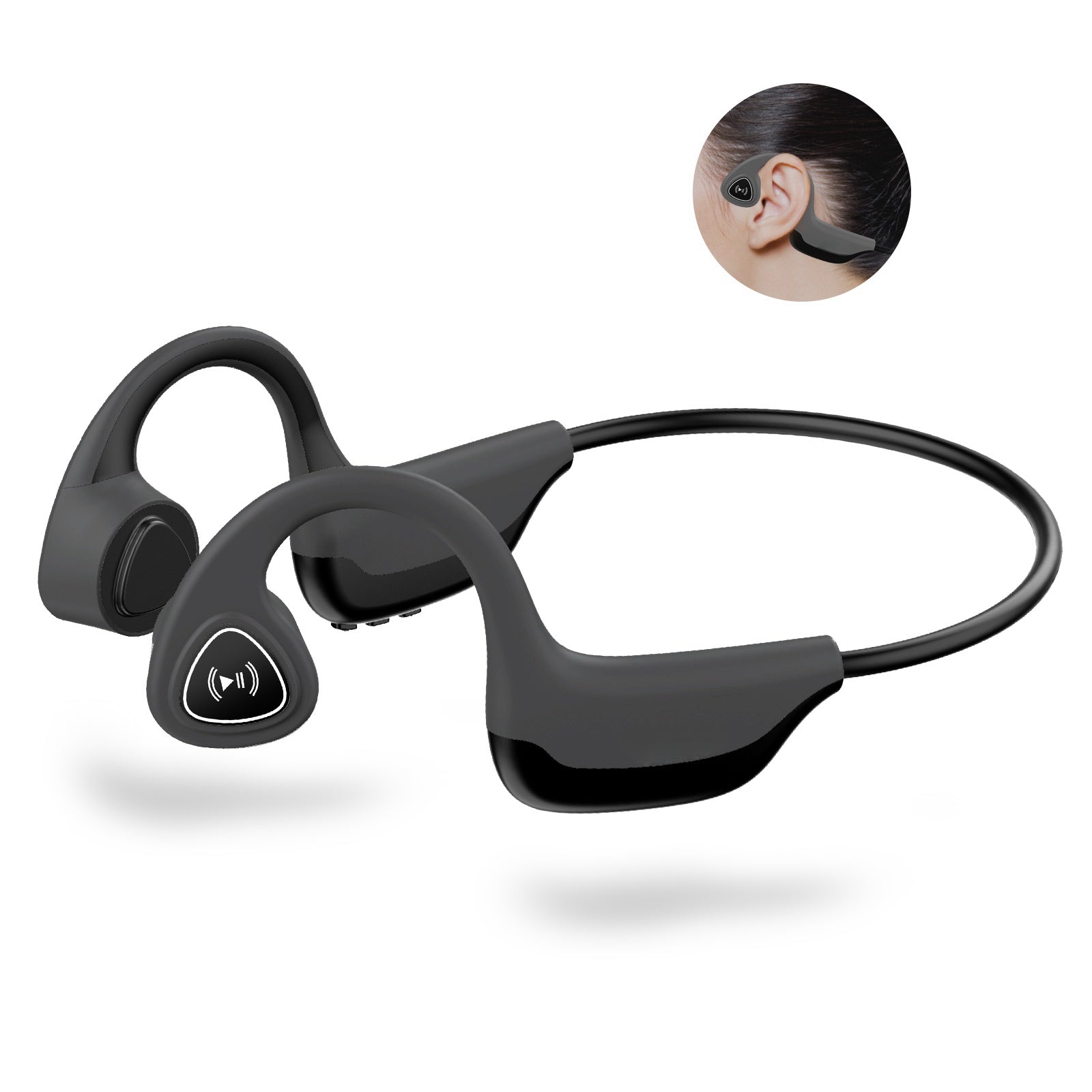
7. Tayogo (Budget Entry)


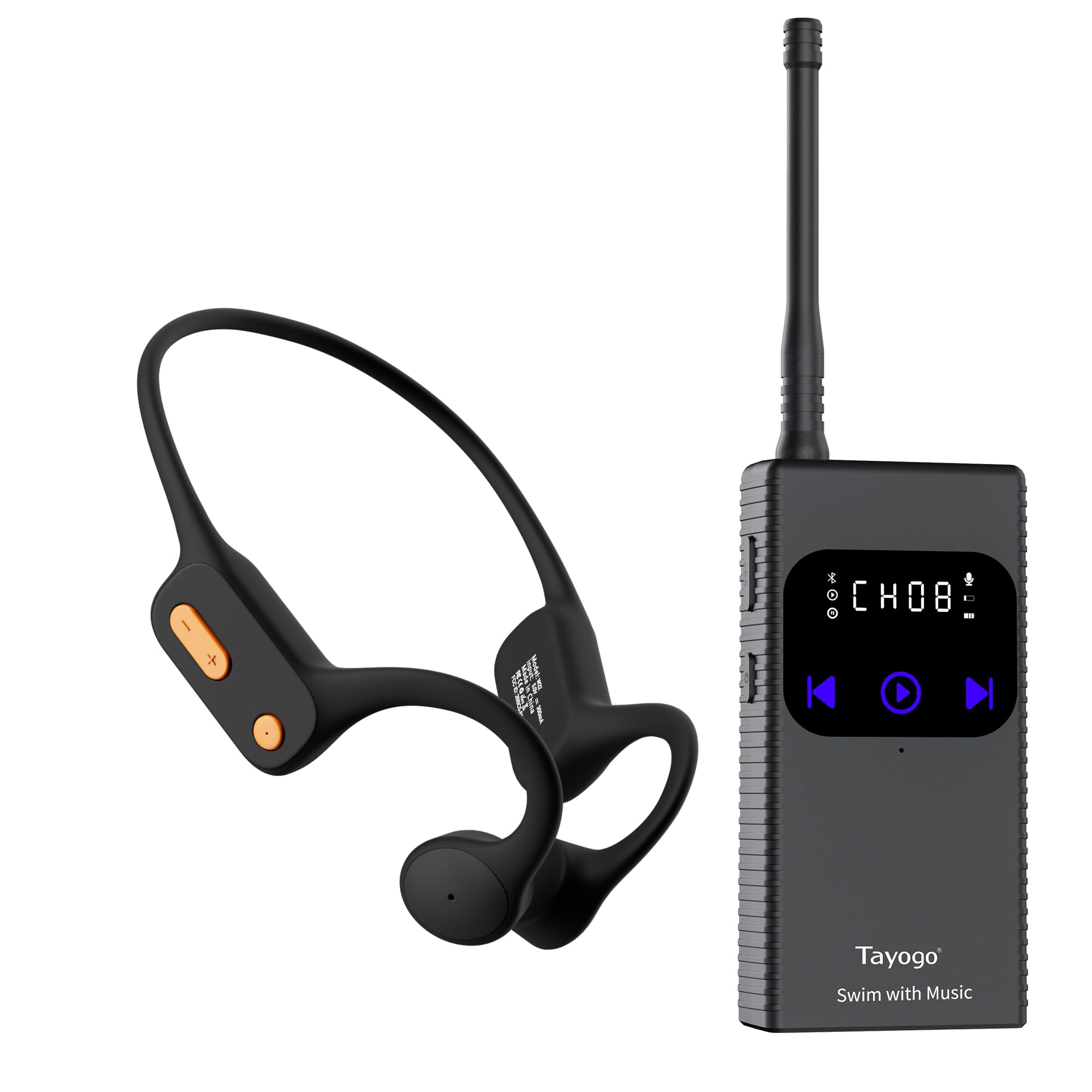
Why it’s good:
- Among the lower-cost bone conduction headphones, making the technology accessible. (GearJunkie)
- Decent for light use, casual listening, or as a secondary pair.
Caveats:
- Fewer premium features, build and sound quality may be more modest.
- Likely less refined fit, less bass, fewer advanced specs.
Who it’s for:
Budget buyers, casual users who want the open-ear benefit and bone conduction’s unique style, and who don’t demand top-tier audio precision.
8. Oladance OWS Sports
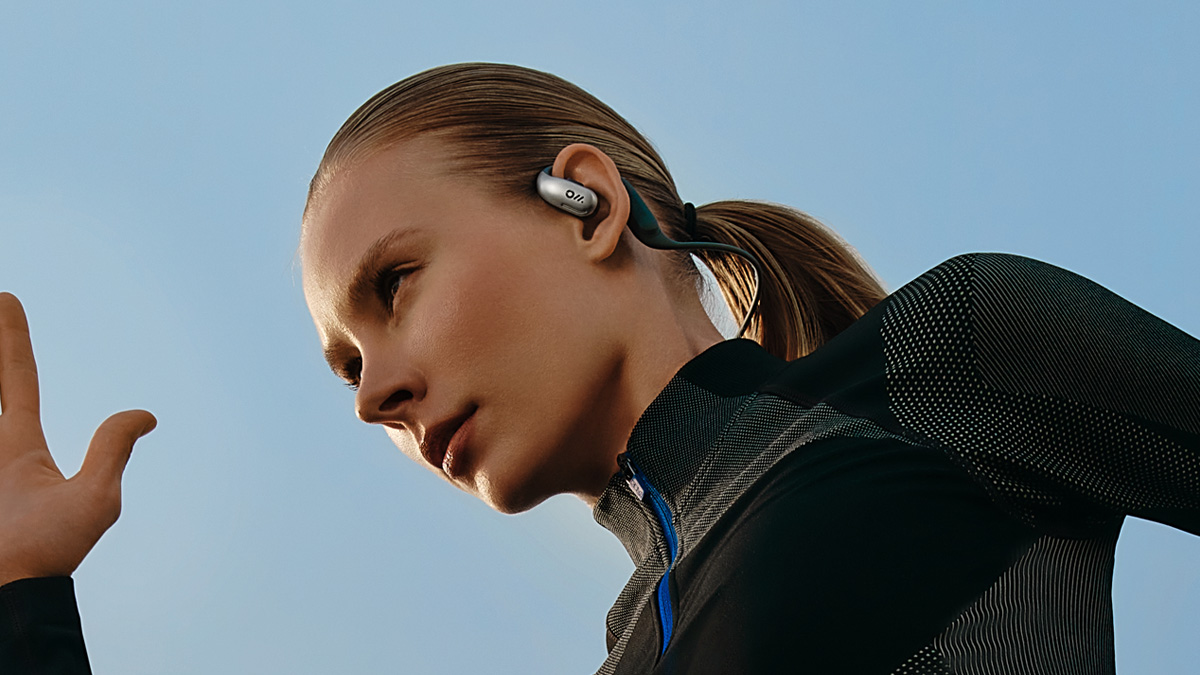
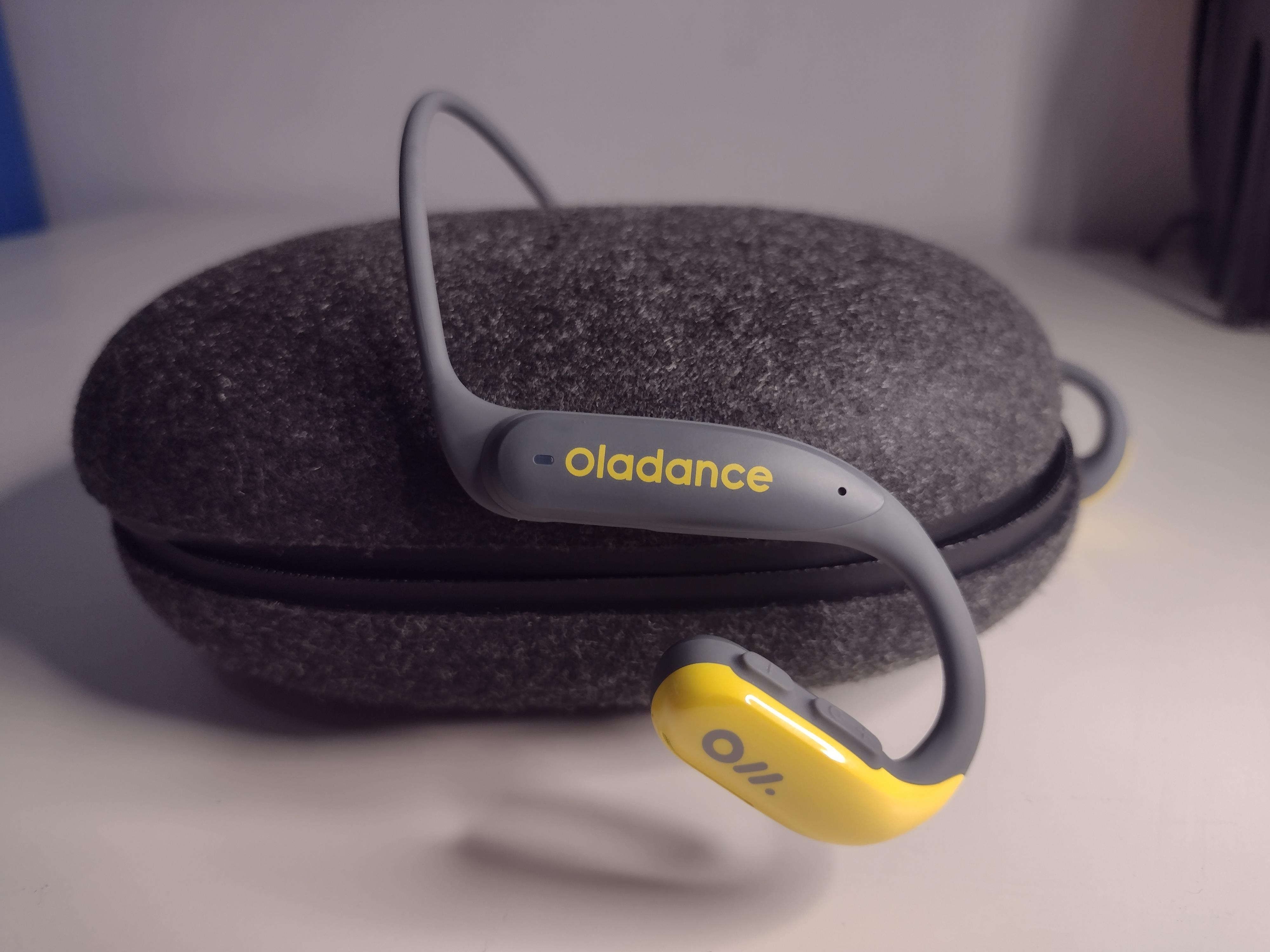

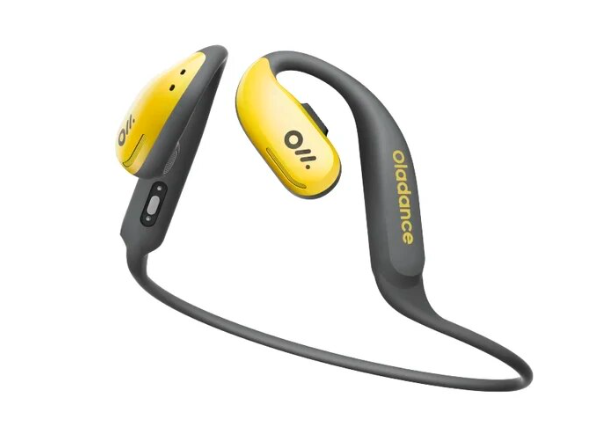
Why it comes up:
- In user threads it’s mentioned as “they sound better and louder than Shokz, and are practically the same otherwise.” (Reddit)
- Useful alternative brand for users who want to explore beyond the major names.
Caveats:
- Less independent review coverage; fit/long-term reliability may be less well documented.
- Main caution: when exploring lesser-known brands, make sure warranty/service/returns are acceptable.
Who it’s for:
Users willing to try a less-mainstream brand that may offer good value and willing to accept some risk/less brand recognition.
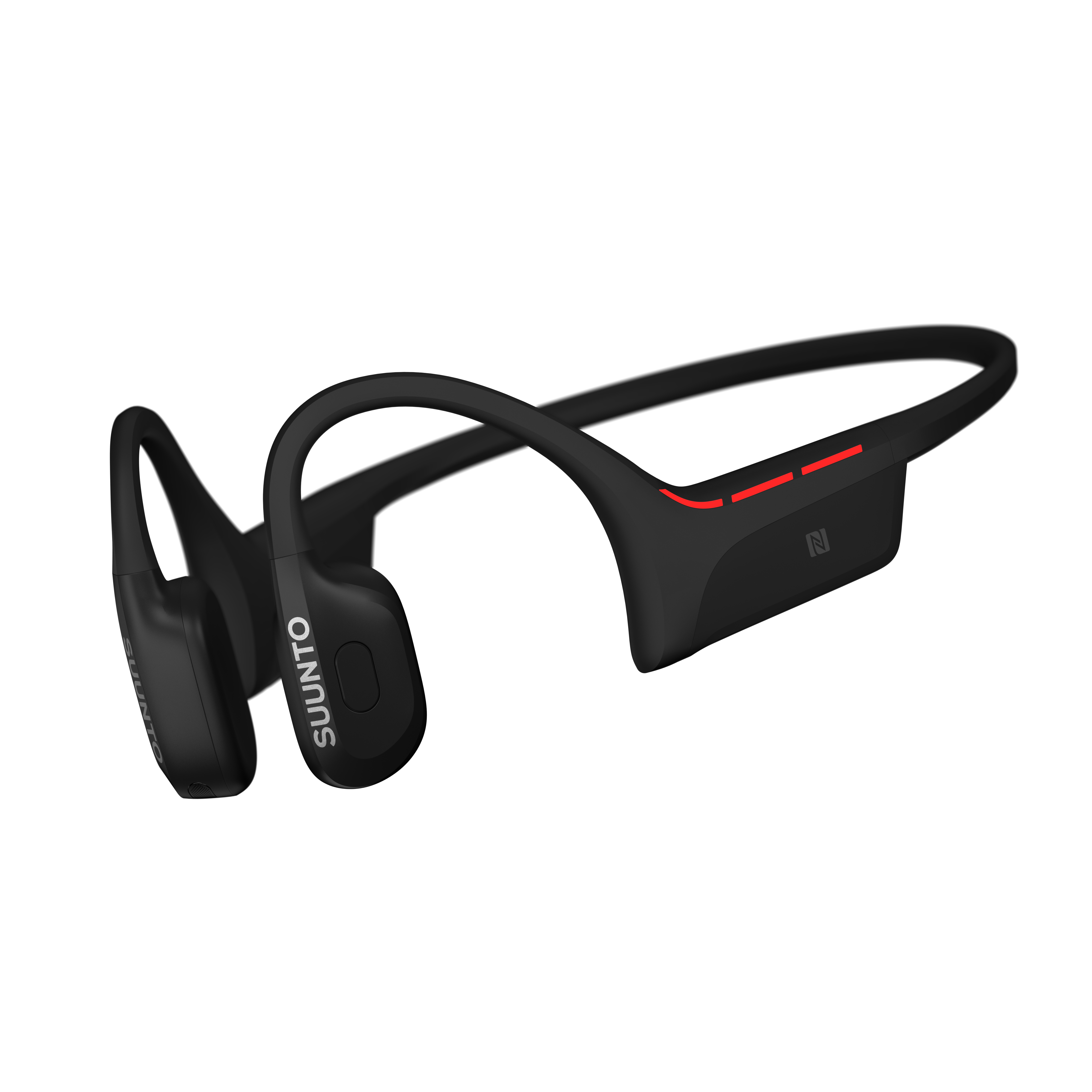
9. Suunto Wing 2 (Open-Ear Hybrid)



Why consider it:
- While strictly not solely bone conduction (this is “open-ear” rather than fully bone conduction), in guides it’s recommended for runners as open-ear/bone/hybrid style. (Cycling Weekly)
- Good for people seeking open ear safety without full bone conduction trade-offs.
Caveats:
- Since this is more hybrid/open-ear than pure bone conduction, the experience will differ; if you specifically want bone conduction, this may not check that box fully.
- May be more expensive; check specs carefully.
Who it’s for:
Runners/cyclists who want helmets/hats compatibility, open-ear design, great fit and a premium experience—but who may value fit & features over purely bone conduction tech.
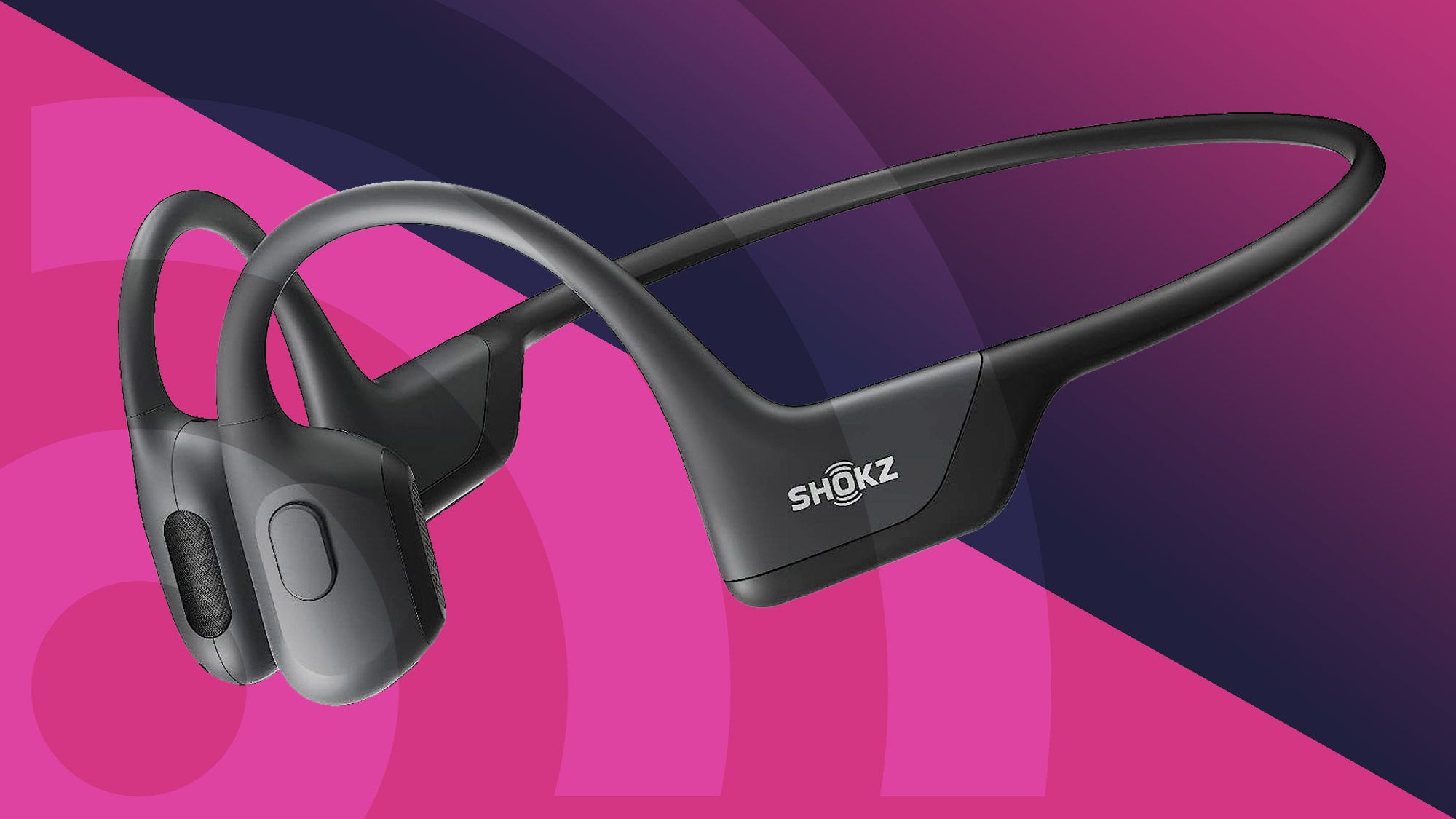
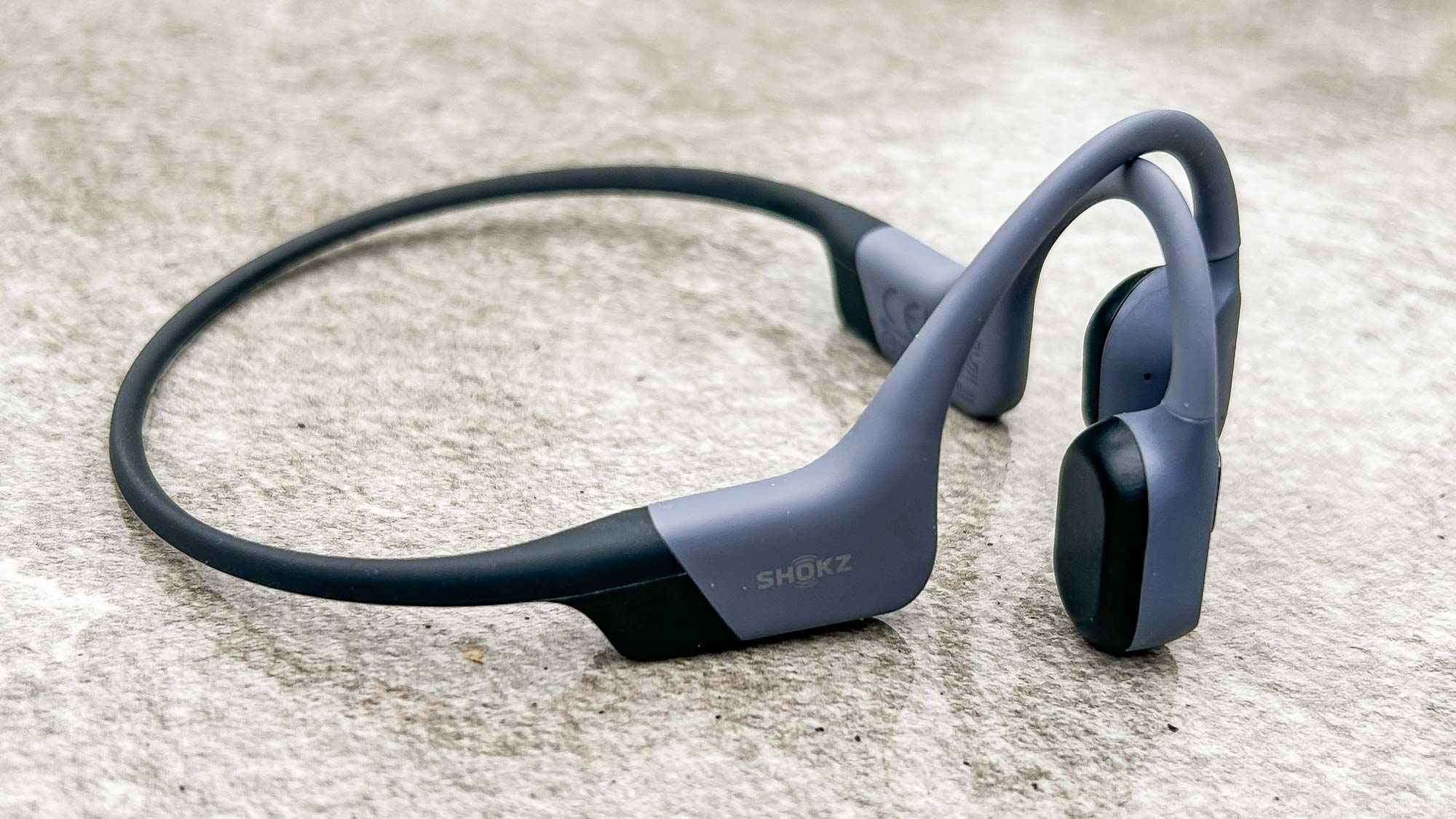
10. YOUTHWHISPER Lite / Other Budget Options

Why listed:
- In “best bone conduction” roundups, budget options like these get mentioned for affordability and practical use. (GearJunkie)
- If you’re trying the tech for the first time and want to prototype without big investment, they’re worth consideration.
Caveats:
- Sound and build quality will be more modest; trade-offs may include fit, battery, durability.
- May lack advanced features (MP3 storage, high waterproof rating, premium materials).
Who it’s for:
First-time bone conduction users, casual listeners, or those who use them in specific contexts (e.g., walking/podcasts rather than full workouts).
🎯 Summary & Tips for “Which one should you pick?”
Here’s a quick breakdown to help you decide based on your use case:
| Use Case | Key Priorities | Recommended Models |
|---|---|---|
| Outdoor running/cycling, safety & sound quality | Secure fit, open-ear, good battery, sport durability | Shokz OpenRun Pro 2, Shokz OpenRun |
| Swimming / triathlon / rugged environment | Waterproof/high IP rating, MP3 storage, secure fit | Naenka Runner Diver2 Pro |
| Budget active use (running, walking, gym) | Good value, decent specs | Haylou PurFree BC01, Creative Outlier Free Pro |
| Casual use / commuting / open-ear comfort | Comfortable fit, open ambient awareness, moderate sound | Tayogo, Oladance OWS Sports |
| Hybrid open-ear premium | Fit & features for sport with open ear design (not strictly bone conduction) | Suunto Wing 2 |
🔧 Buying & Usage Tips
- Fit check: Try them on if possible. The transducers (where the vibrations touch your skull) need good contact for best sound.
- Volume levels: Because you may be aware of ambient noise, be cautious you’re not cranking volume too high to compensate—extended high volumes still risk hearing fatigue. Experts advise moderate volume. (Live Science)
- Use case matching: If you need to hear announcements or traffic (commuting, running) open-ear is a major plus. If you want immersive sound, maybe bone conduction is not the best match.
- Care & maintenance: For waterproof models, check charging port type, seals, how easy they are to dry off, etc.
- Expectations: Don’t expect closed-back headphone bass and full isolation. These are different in trade-offs.
- Firmware / software features: Some models include companion apps, EQ settings, multiple audio modes—worth exploring if sound quality matters.
- Battery & quick charge: For longer workouts or commutes, look at the quick-charge features (e.g., 5-10 minutes gives 1-2 hours usage) which many modern models support.
- Ambient awareness vs isolation: If you’re often in very noisy environments (busy traffic, trains) you might still struggle to hear your music without increasing volume. Consider this when choosing or using.
📝 Final Thoughts
Bone conduction headphones offer a truly lovely and unique experience: you get music, podcasts or calls — yet your ears are free. You can talk to someone, hear the city, the traffic, your surroundings — all while staying engaged in what you’re listening to.
From the 10 models above, you’ll find options for high-end sport use, ultra-budget picks, waterproof swimmers-friendly models, and everything in between. Choose based on your lifestyle: running outdoors? Swimming? Commuting in a busy city? Just want ears to “breathe”? Match that to fit/budget/sound.
While you’ll be trading a bit of bass/immersion compared to full-isolation headphones, the trade-off is often worth it — especially for everyday awareness and comfort. Many reviewers say: yes, you could listen to music with them every day, and the fact your ears remain free is liberating. (Audiophile ON)
If you like, I can pull live pricing for Pakistan / South Asia, list regional models, or show audio comparison clips for bone-conduction vs in-ear. Would that be helpful for you?
FAQs about Bone-Conduction Headphones
1. How do bone-conduction headphones work?
They use small vibrating transducers that sit against your skull (often near the cheekbones or temples) and transmit sound vibrations through the bone directly to the inner ear (cochlea), rather than via the ear canal and eardrum in the usual “air-conduction” way. RTINGS.com+1
Because your ear canals remain open, you can hear ambient sounds while still listening to audio.
2. Are bone-conduction headphones safe for your hearing?
Generally yes — they are safe to use, in that they don’t inherently damage your ears more than other headphones, but you still need to use them responsibly. RTINGS.com+2cavcominc.com+2
Key points:
-
The inner ear (cochlea) is still handling the sound signal, so loud volumes for long durations can cause hearing damage, just like regular headphones. cavcominc.com
-
Because your ears are open, you’re more aware of surroundings, which is a safety advantage, especially for outdoor use.
-
Fit, volume, and duration matter: poorly-fitting devices or too high volume can cause issues (vibration discomfort, hearing fatigue). soundcore
3. What are the benefits of using bone-conduction headphones?
-
Open-ear design: You can listen while still hearing ambient sounds (traffic, conversations, announcements).
-
Comfort / ear-canal free: No plug inside your ear, less risk of ear-canal discomfort or hygiene issues.
-
Good for sports/outdoor: Many models target runners, cyclists, swimmers with sweat/water resistance and stable fit.
-
Can be helpful for people with certain types of hearing issues (though these are consumer devices, not medical devices). goldendance.co.jp+1
4. What are the trade-offs or limitations?
-
Sound quality (especially bass/low frequencies) is usually weaker compared to traditional in-ear or over-ear headphones. The transmission via bone is less efficient for deep bass. Shokz Canada+1
-
Some sound leakage: Because the transducers are outside the ear and ambient sound mixes in, others nearby might hear what you’re listening to, especially at higher volumes. Shokz Canada+1
-
Fit and comfort matter more: If the device shifts or doesn’t sit correctly, vibration/contact is affected, and audio quality can suffer. Nank(Naenka)+1
-
If you want full noise isolation (for travel/flight) or very deep immersive music, these may not be ideal.
5. Who should use bone-conduction headphones?
They’re especially good for:
-
People who exercise outdoors (running, cycling) and want to stay aware of traffic and surroundings.
-
Commuters who want to listen to audio but still hear announcements or ambient noise.
-
Individuals who dislike in-ear plugs or over-ear cups, or who find them uncomfortable.
-
Situations where ear-canal hygiene or openness matters (e.g., letting ears breathe).
But if you’re looking for audiophile-level sound, heavy bass, or complete isolation — you might prefer traditional headphones.
6. Can wearing them cause headaches or discomfort?
Yes — for some users. Factors include: too tight a band, prolonged usage, high volume (vibrations), or sensitivity to vibration contact on the skull. soundcore+1
If you experience discomfort, consider adjusting fit, lowering volume, taking breaks, or trying a different model.
7. Are they good for swimming / waterproof use?
Some models are built specifically for swimming/triathlon use (with high-waterproof ratings, onboard MP3 storage since Bluetooth may not work underwater). But not all bone-conduction headphones are swim-ready — always check the IP rating and features. RTINGS.com+1
8. Can people with hearing loss use them?
It depends on the type and severity of hearing loss. Some bone-conduction devices are used for hearing assistance, but consumer models aren’t medical-grade. One FAQ notes: “It has to depend on the type of hearing loss and varies among individuals.” goldendance.co.jp+1
If you have significant hearing loss, consult a hearing specialist before relying on consumer bone-conduction headphones.
9. How to choose a good pair of bone-conduction headphones?
Key criteria:
-
Fit & comfort: Ensure the band/headset sits securely, transducers rest on the bone properly.
-
Battery life & charging: For longer sessions, look for models with strong battery and quick charge.
-
Waterproof/sweat resistance: Especially for outdoor/sport use.
-
Sound quality & features: While you’ll have trade-offs, better models mitigate them (e.g., hybrid drivers).
-
Ambient awareness & safety: For outdoor use, open-ear advantage helps.
-
Brand & support: Good manufacturer, warranty, firmware updates.
Reviews from sources like RTINGS outline how to evaluate these. RTINGS.com
10. Do they work well in noisy environments?
Not as well as sealed in-ear noise-isolating earbuds. Because your ears are open and ambient noise enters, in very noisy settings you may need to turn up volume, which may offset the benefit of open-ear awareness. One caveat: Incorrect placement or loud ambient noise can reduce clarity. goldendance.co.jp+1
If you’re in very loud environments and primarily want audio clarity, closed/over-ear designs might be better.