Trail cameras are some of the most fascinating outdoor gadgets ever invented. They quietly sit in the woods, in farms, or along hiking trails… watching. Day or night, rain or shine, they capture photos and videos of what’s happening when no one is around. But one question people often wonder is:
How does a trail camera work at night?
You’ve probably seen those cool black-and-white wildlife photos — deer wandering past in the dark, foxes hunting, raccoons exploring, and sometimes even predators like coyotes or bobcats. All captured without a human being anywhere near the scene.

Check article: 5 Best Game Cameras that Send Pictures to Phone
In this friendly, simple, and deeply detailed guide, we’re going to explore exactly how trail cameras work after the sun goes down. No complicated technical talk — just easy-to-understand explanations, real-world examples, and practical tips that anyone can follow.
Let’s dive into the magic of nighttime trail cameras.
🌙 Why Night Vision Matters in Trail Cameras
When the sun disappears and nature gets dark, most animals become even more active — especially nocturnal ones like owls, raccoons, bats, wildcats, and many rodents. Hunters, wildlife photographers, farmers, and researchers rely on trail cameras to track these nighttime movements.
Without proper night vision, a trail camera would simply capture darkness.
That’s where night technology comes in.
Trail cameras are specially designed to see in the dark using infrared light, motion sensors, and fast lenses. They don’t need a flashlight or a visible spotlight — and they don’t scare away animals.
Night vision is actually one of the biggest reasons trail cameras are so effective.
This is our top selected game cameras



⭐ How Does a Trail Camera Actually See in the Dark?
To understand this easily, imagine the human eye. At night, our eyes struggle because there’s not enough light. But trail cameras are built differently. They use technology to create their own invisible light source.
Here’s the simple breakdown:
1️⃣ Trail cameras use infrared LEDs
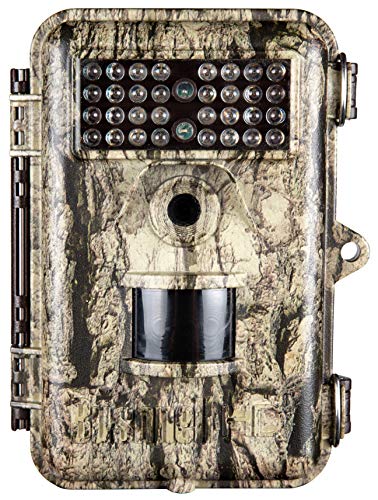
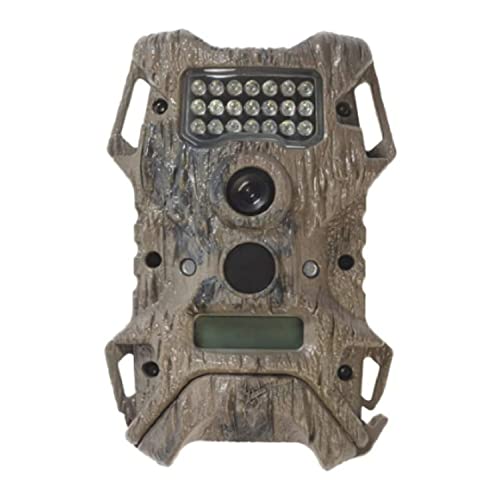
These are tiny lights on the front of the camera. You might see them glow faintly red or be completely invisible depending on the model.
2️⃣ They shine invisible infrared light into the darkness
Humans can’t see infrared light, but the camera’s sensor can.
3️⃣ The camera’s sensor captures the scene using that light
This creates a black-and-white image that looks extremely clear.
4️⃣ A motion sensor tells the camera when to wake up
This saves battery power and ensures the camera only takes pictures when something moves.
So the camera does three things in sequence:
- Detects motion
- Fires invisible infrared light
- Takes a night photo or video
That’s nighttime trail photography in its simplest form.
But if you’re curious about the deeper details, let’s break it all down step by step — in a friendly and enjoyable way.
🦌 Step-by-Step: What Happens When an Animal Walks by at Night?
Let’s imagine the scene.
It’s midnight. Quiet. A breeze is blowing through the trees.
A deer slowly walks along a forest path. Your trail camera, strapped to a tree, is asleep — saving battery.
Then the magic begins…
1. The PIR Motion Sensor Senses Body Heat and Movement
PIR stands for Passive Infrared sensor.
This special sensor can detect:
- body heat from warm-blooded animals
- movement across its detection zone
So when the deer enters the PIR range, the camera wakes up instantly.
This is why trail cameras don’t record all night — they only trigger when something moves.
2. The Camera Activates the Infrared LEDs
These LEDs illuminate the scene in invisible light.
To us, the forest still looks dark.
But to the camera?
It’s suddenly bright enough to capture details:
- fur texture
- body shape
- distance
- surroundings
This light is safe, silent, and doesn’t spook animals.
3. The Camera Captures a Photo or Video
The light from the infrared LEDs bounces off the animal and returns to the camera’s image sensor.
Night photos are almost always:
- black and white
- high contrast
- crisp and clear
Some trail cameras have night video mode, capturing 10–60 seconds of footage.
4. The Camera Saves the File to an SD Card
Whether it’s a photo or video, it gets stored instantly.
Some trail cameras even send the picture to your:
- phone
- cloud storage
But most common models save everything locally.
5. The Camera Goes Back to Sleep
Once the motion stops, the camera turns off its LEDs and returns to low-power mode.
This helps batteries last for months.
🌚 Types of Night Vision in Trail Cameras
Not all trail cameras work the same at night. There are different types of infrared illumination.
Here are the main ones:
🔴 1. Red Glow Infrared (850nm)
These LEDs give off a faint red glow when active.
Pros:
- brighter nighttime images
- better range
- more detail
Cons:
- some animals might notice the red glow
Good for wildlife monitoring and property surveillance.
⚫ 2. No Glow Infrared (940nm)
These LEDs are completely invisible to humans and animals.
Pros:
- great for security
- animals never detect it
- ideal for sensitive wildlife areas
Cons:
- slightly shorter night range
These cameras are very popular for keeping an eye on your property.
🔦 3. White LED Flash (old-style)
This is like a regular camera flash.
Pros:
- full-color night photos
Cons:
- very visible
- can scare wildlife
- consumes a lot of battery
These are rare nowadays.
🛠 How Trail Cameras Capture Clear Photos at Night
Here’s where things get really interesting. Several features work together to create bright, sharp night images:
🎯 1. Sensitivity of the PIR Sensor
A good PIR sensor detects motion accurately and avoids false triggers from:
- wind
- grass
- shadows
📸 2. Shutter Speed
Night shutter speeds are slower so the camera can gather more light.
But if an animal is moving quickly, motion blur may appear.
🔆 3. Number of Infrared LEDs
More LEDs = more illumination.
Basic models have 20–30 LEDs.
Advanced ones have 60–100.
🔍 4. Aperture Size
A wider aperture lets more light hit the camera sensor.
Some trail cameras are specifically built for nighttime clarity.
🌃 5. Image Sensor Quality
Bad sensor = grainy night photos.
Good sensor = crisp, smooth, detailed photos even in full darkness.
📡 How Wireless Trail Cameras Work at Night
Many modern trail cams use cellular networks like:
- 4G LTE
- 5G
- or Wi-Fi
At night, nothing changes — they simply send the photo after capturing it.
They use the same:
- PIR sensor
- infrared LEDs
- night mode capture
But the transmission to your phone happens after the photo is saved.
This means you can receive nighttime wildlife photos in real time.
Pretty amazing, isn’t it?
🔋 How Trail Cameras Save Battery at Night
Night photos require:
- more power
- stronger LED use
- longer exposure
But trail cameras are designed to last months.
Here’s how they save battery:
✔ Wake only when needed
✔ Use low-energy PIR sensors
✔ Turn on LEDs only for seconds
✔ Return to sleep mode immediately
High-quality trail cams can last:
- 3–8 months on AA batteries
- 12+ months with lithium or solar
🐾 What Animals Look Like on Night Photos
If you’ve never used a trail camera at night, you’re in for a treat.
Night shots appear in high-contrast black and white, with glowing animal eyes reflecting infrared light.
You’ll often see:
- deer calmly grazing
- raccoons digging for food
- rabbits hopping through grass
- foxes hunting mice
- coyotes traveling in pairs
- owls swooping down
- unexpected visitors like wild boars or stray pets
Trail cameras reveal a world most people never get to see.
🧭 Tips for Getting the Best Night Photos
Here are friendly, practical tips that make a big difference:
✔ 1. Aim the camera at open space
Avoid dense bushes — they reflect infrared light.
✔ 2. Mount the camera 2–3 feet high
Perfect for capturing most wildlife.
✔ 3. Don’t aim directly at the sunrise or sunset
It can confuse the sensor.
✔ 4. Clear any branches or grass in front of the camera
They can trigger false alerts.
✔ 5. Use fresh batteries or lithium packs
Better brightness + longer runtime.
✔ 6. Choose no-glow infrared for sensitive animals
Great for rare wildlife.
✔ 7. Try different positions and distances
Night photography is part science, part fun.
❓ Common Night Trail Camera Problems (and Easy Fixes)
Blurred images
Cause: animal moving fast
Fix: choose a faster shutter / switch to photo instead of video
Too dark photos
Cause: weak LEDs
Fix: upgrade to no-glow or long-range IR
Overexposure
Cause: animal too close Fix: reposition camera
False motion triggers
Cause: heat changes or moving branches
Fix: adjust PIR sensitivity
Short battery life
Fix: use lithium batteries or solar panel packs
🌲 Real-Life Uses of Night Trail Cameras
Trail cameras are used by:
Wildlife researchers
To study animal patterns.
Hunters
To track movements during early morning and late-night hours.
Farmers
To monitor predators like foxes, coyotes, or raccoons.
Homeowners
To protect property from trespassers.
Nature lovers
To enjoy nighttime wildlife.
Night footage adds huge value to each of these uses.
🏕 Final Thoughts — The Magic of Night Trail Cameras
Trail cameras are amazing tools that bring the hidden world of nighttime wildlife into view. They work using a clever combination of motion sensors, infrared light, and fast camera technology — all designed to operate silently in total darkness.
Whether you’re a hunter, a farmer, a wildlife watcher, or simply curious about what happens after dark, a trail camera gives you a window into the nighttime world.
You’ll see animals you never knew were there. You’ll understand their habits, movements, and behavior. And most importantly — you’ll connect more deeply with nature.
Night trail cameras are simple, powerful, and incredibly fun to use.
Happy tracking! 🌙📸
Check article: 5 Best Game Cameras that Send Pictures to Phone
Last update on 2026-05-05 / Affiliate links / Images from Amazon Product Advertising API